Reflect
It’s the UN’s annual World Environment Day this Friday. To mark the occasion, the first two sections of this week’s Wednesday Wisdom are written by Emma Butler, a PhD researcher who studies the seaside in the nineteenth-century literature at Edge Hill University.
I’m sure lots of us remember the Covid-driven increase in ‘staycations’ back in 2020 and 2021. Whilst beach holidays by the sea have long been popular, driven by strict global travel restrictions, five or so years ago, numerous Brits swapped the sandy shores of Europe and other popular destinations for their local seaside resort. Our love of international travel has since resumed and many of us will be lucky enough to jet off somewhere this summer. But our appreciation for the coast closer to home has not disappeared. One survey reported that 69% of Brits would be happy to holiday at home in 2025 and that 36% of these would head to the seaside.
The ‘staycation’ is nothing new and nor are international travel restrictions. My research journey began during an MA module on Victorian seaside leisure, where the British coast was explored as a space of health, recreation and social change. Between 1792 and 1815, travel to mainland Europe, particularly France, was highly dangerous and frequently suspended due to the French Revolution and the following Napoleonic Wars. This in turn impacted the famous ‘Grand Tour’ that many wealthy sons undertook as part of their education as young men. Many instead turned to emerging British seaside resorts.
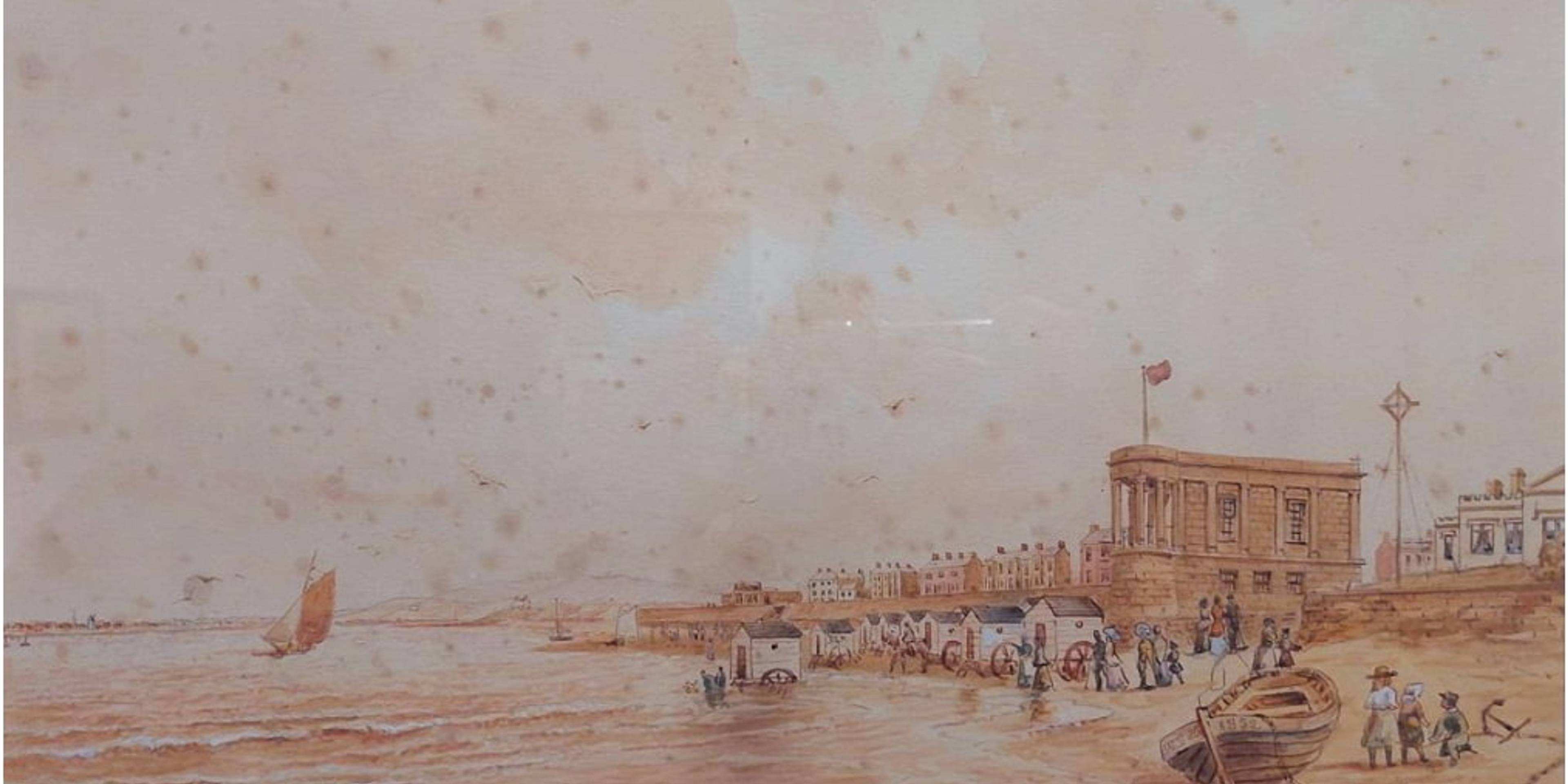
Visiting the British coast was initially popularised over 200 years ago as a health treatment, predominantly for the rich. Bathing in sea water and breathing in sea air was first advocated as being healthy by Dr Richard Russel in a medical text published in 1752. Similar medical advice followed from many others throughout the eighteenth and nineteenth centuries, and numerous characters in fictional works from the period benefited from the restorative sea air. The seaside (particularly Brighton) was then popularised as a place of leisure by the Prince Regent, later King George IV. Cumbersome wheeled bathing machines made it easier (and more socially acceptable) to bathe in the sea for one’s health, especially for women who needed to remain safe and modest in their swimming attire! By the Victorian era, the seaside became more widely accessible to the working class, with the invention of the railway and increased workers’ rights and holidays. Many resorts in the North (West) of England (most famously Blackpool) rose to popularity as working-class seaside holiday resorts, complete with donkey rides, dances and entertainment on the piers.
Motivate
Coming from the North West of England, I have a particular fondness for my local beaches. Southport and Blackpool especially, as more established seaside resorts, but also smaller beaches like Formby.
Southport has recently had a major £37.5 million rejuvenation investment. The pier, which was historically its main tourist attraction, was built in 1860 and is the second-longest in the UK (the first being at Southend-on-Sea in Essex) at 1,108 metres in length. It's been closed due to disrepair since 2022, but is currently being restored (a rejuvenation which the council estimate will generate £15 million a year for Southport’s economy). Southport will also be getting a new coastal attraction called Cove Resort, which will include leisure activities such as a lagoon, thermal spa and a new hotel. Yes, it's good for tourism and the economy, but also for the appreciation of the coast as a natural space.
The quieter Formby Beach, managed by the National Trust, is located further along the coast towards Liverpool. It’s situated within a coastal nature reserve that features a beach, sand dunes and forest. As well as the beach, which provides a space for sunny days filled with paddling, picnics and the regular-visiting ice cream van, Formby’s forest is home to rare, endangered red squirrels, and the coast is home to natterjack toads, sand lizards, newts, tiger beetles and over 450 species of flowering plants. The beach also has prehistoric footprints and historic shipwreck remains that can be seen in the right weather conditions.
For many families, the coast continues to be associated with rest, recreation and improved mental health. Time by the sea can offer space to slow down, reconnect and experience nature and science together. Coastal areas are vital ecosystems, shaping biodiversity, weather systems and the wider health of our changing planet. These environments also form a key part of the school curriculum across primary and secondary education and are accessible spaces where we can easily connect learning to lived experience. In the words of Sir David Attenborough, “After almost 100 years on the planet, I now understand the most important place on Earth is not on land, but at sea”.
And after all, who doesn’t love a trip to the beach, a cone of chips, a trip to the arcade and maybe some ice cream? Fun for all ages and all the family. Just don’t forget your bucket and spade!
Support
More than 250 years ago, people travelled to the seaside believing that it could improve their health. Today, whilst we may be a little more sceptical about miracle cures, the coast still has plenty to teach us. When we tire of sunbathing, get bored with paddling and splashing around in the water, and cease to feel the restorative benefits of the sea air, we could perhaps use the time with our children (young and old) to learn something new.
Science educator Lucy Haseler, describes the beach as a giant science laboratory, offering opportunities to explore everything from marine life and habitats to weather, tides and erosion. She suggests becoming a shark detective and searching the strandline (the shifting line of seaweed, driftwood and debris deposited on a beach with the high tide) for a "mermaid's purse", which is the leathery egg case of a shark or ray (amazingly, these can be found pretty easily on the UK coast). Children might enjoy exploring rock pools to identify creatures and habitats, while teens could even investigate wave energy by placing different-sized pebbles along the shoreline to see which are carried furthest by the waves (a simple experiment scientists use to record the movement of beach shingle and measure erosion). If you plan to be at the beach all day, you could even make a sundial out of sticks and pebbles or shells.
Here in the UK, several hot and sunny weeks in May seem to be giving way to a more tempestuous June. Tragically, the unusually warm weather brought with it multiple reports of water-related deaths across the country, mainly impacting children and teens. Drowning remains one of the leading causes of accidental death in children and young people in the UK, and almost all occur in our warmer months.
As we make the most of our beaches, rivers and lakes this summer, it is vital that we plan for potential risks, and chat about water safety to any teens who might be venturing off on their own. Before swimming in the sea or other open water, we can take time to identify lifeguarded areas, check local conditions and talk about risks such as rip currents, changing tides and cold-water shock. The vast majority (around 85%) of accidental drownings occur at open water sites, such as lakes, lochs, ponds, quarries or reservoirs. Here, the water depth can be changeable, banks and river beds can be uneven, hazards may not be easily seen and there may be strong or dangerous currents. Acclimatising to cold water is also an important step in enjoying a safe swim. For anyone keen to give open water swimming a go, the RLSS has a Sponge to Plunge plan to help.
The Royal Life Saving Society UK's Water Safety Code provides a simple framework that families can learn and practise together. Teach children that, if in trouble, they should fight the instinct to thrash around, try to relax and float using their hands to help. Give them opportunities to practise this technique somewhere safe, like a local swimming pool. Watch the RNLI's 'float to live' video here for further advice. Of course, younger children should always be closely supervised near water (including paddling pools), even when they're not intending to swim.
The disinhibiting effects of alcohol and drugs might trigger unsafe behaviour and can affect our ability to get out of trouble in the water. In fact, alcohol and drugs are a factor in about one in three drownings. It’s well worth chatting to older teens about the risks of mixing alcohol and swimming, particularly if they are heading off on their first solo holidays with friends.
Basic water skills can be life-saving. The RLSS offers numerous resources for schools, aiming to give children of all ages the confidence to be safe in, on and around water. Secondary schools might like to open up conversations about water safety using a new water safety campaign created by students at a London school. In it, they encourage peers to learn about the dangers of open water and the risks of cold water shock using the acronym WAVES: Water Awareness Values Everybody's Safety.
The sea and the seaside remain vital not only to our culture and history, but also to the health of our ecosystems and our own wellbeing. With a little preparation and awareness, we can enjoy all that our beaches, rivers and lakes have to offer, making memories that are both joyful and safe.
(Image credit: Unknown Artist, ‘View of Southport Beach from Behind the Promenade Lodge’, c.1840. Photograph by Emma Butler)
Are you a Tooled Up member?
Anyone making the most of the coast this summer might like to look at the following Tooled Up resources:
Water Safety and Drowning Prevention
Keeping Children and Teens Safe in the Sun
Beach Science: Primary Aged Children
Underground Exploration: The World of Caves
School staff might like to use:
Staying Safe Around Fire and Water - Lesson Presentation for 7-11 Year Olds