Reflect
It is Mental Health Awareness Week 2026 in the UK, a chance to pause and reflect on what truly helps us feel happier, healthier and more emotionally grounded. This week, I found myself thinking about the messages we give teenagers about mental health, so I took a trip down memory lane to remember what being a teenager felt like.
From the ages of 9 to 21, I kept a locked diary, and last weekend I revisited those volumes of teenage life. Early entries warned nosy siblings to “GO AWAY, THIS IS PRIVATE,” before several pages complaining about them. Alongside that expressed desire for privacy was an equally strong longing for connection: overthinking about boys, intense friendships, as well as endless analysis of who liked, ignored or sat next to whom.
My diaries were full of bizarre passionate monologues and digressions about various aspirations. At 15, I was passionately involved with Amnesty International while simultaneously dreaming of becoming both a nun and a vet. I worried endlessly about exam results and teachers’ opinions, whilst doodling imagined future surnames across the same pages. There were complaints about clothes I couldn’t afford, heartbreak over friendship fallouts, and forensic analysis of every glance, silence or comment by other pupils in school.
Despite all the documented ups and downs, I’d say my mental health as a teenager was excellent. I never felt so low that I lost hope, so anxious that I withdrew from life, or so overwhelmed that I could no longer see a way forward.
In 2026, we know many tweens and teens worry about the same things. But modern life undoubtedly amplifies longstanding adolescent anxieties. Friendships, fallouts and comparisons now follow young people everywhere, often without pause or escape.
In some ways my teen years had a slower and more enjoyable pace. As tweens and teens back in the late 80s and early 90s, we enjoyed long stretches of boredom, reflection and shared family life. Car journeys meant staring out of the window and thinking. Television was enjoyed together in one room. Turns were taken deciding what to watch. We spent more time outdoors and were given greater independence. By my late teens, friends and I were travelling across Europe with paper maps, phone cards and a sense of complete freedom.
Family life was deeply social. My grandmother lived with us and our home was full of people dropping in for tea and conversation. Nobody really scheduled visits in advance and that was fun!
“Mental health” was rarely discussed explicitly in my childhood, but many of the foundations that support it were quietly present: stability, community, belonging, opportunity, safety and connection.
I was also fortunate to attend a fantastic secondary school where expectations were high and teachers deeply respected. Those relationships helped shape a strong sense of identity and self-worth. When things did feel difficult, I coped by listening to loud music, crying into my pillow, walking around the block, writing poems or calling my best friend. Now in my early 50s, they remain many of the same coping mechanisms I use today.
Motivate
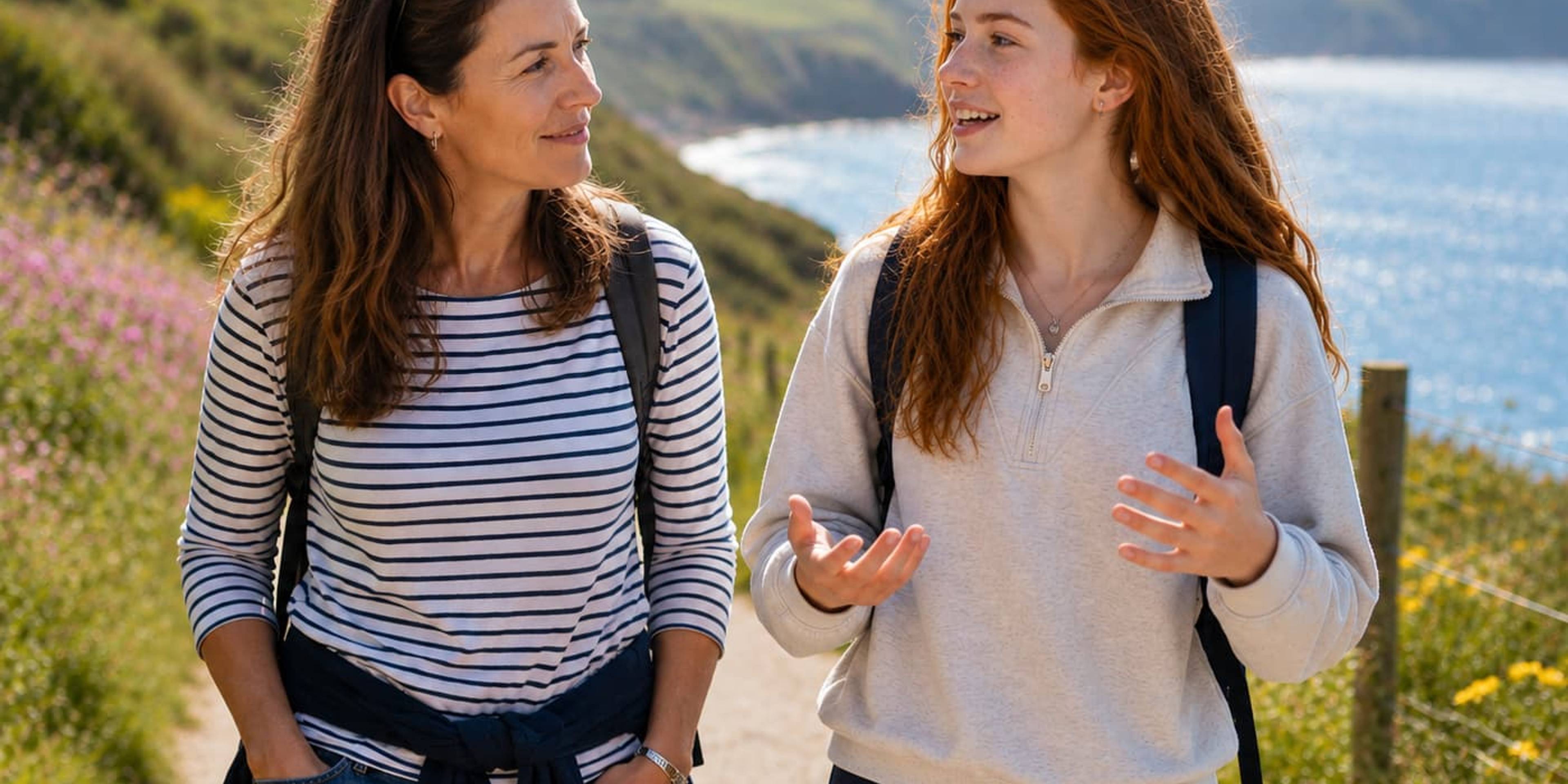
This morning, I went for a walk with a young woman whose childhood looked very different from my own, and who has struggled with significant mental health difficulties throughout her adolescence.
Unlike me, she did not grow up with loving, stable parents. Home life was chaotic and stressful. There was conflict, caring responsibilities for younger siblings and little emotional or practical support. Education sat low on the family priority list, and trying to study without quiet space, reliable technology or encouragement was almost impossible.
She described the relationship between chronic stress and the physical symptoms she experienced over time: hair loss, insomnia, anxiety and exhaustion, eventually reaching the point where attending school became unmanageable. As she grew older, she noticed people increasingly expected her to simply “get on with it". But people rarely see the whole story: the accumulated adversity, complicated family dynamics and sheer resilience required just to keep functioning.
I asked her what poor mental health feels like. She described it as “a big ball of wool,” impossible to know where to begin unravelling. So, what helped her turn a corner? One adult who listened to the whole story. For her, it was a kind college teacher who consistently ‘checked in’, listened carefully and offered both emotional and practical support.
This resilient young woman protects her mental health now so intentionally, prioritising sleep, nutrition, walking and journaling. She focuses on what she can control rather than what she cannot. Interestingly, she experiences social media as hopeful and motivating. She curates online spaces that feel creative, joyful and aspirational, giving her glimpses of possibility beyond her current circumstances. She feels that the proactive steps she is taking are supporting her in sustaining a positive trajectory and remains grateful for what is going well every single day.
Perhaps that is what Mental Health Awareness Week should remind us of: awareness matters, but action matters more.
Support
The young woman I walked with this morning reminded me how differently mental health difficulties can emerge and why simple explanations rarely tell the full story. Adolescence is a uniquely vulnerable period for mental health difficulties, but it is never shaped by one thing alone. Family relationships, friendships, bullying, sleep, loneliness, school pressure, identity, physical health and online experiences all interact in complicated ways.
That complexity matters because public conversations about teenage mental health routinely search for a single cause or villain. Social media is frequently presented as the obvious explanation, yet research involving more than 12,000 UK teenagers by Dr Margarita Panayiotou found it was one of the least influential factors compared with family support, life satisfaction and school experience. That does not mean social media has no impact. Of course it can. But it does remind us that young people’s emotional wellbeing is shaped far more deeply by the quality of their relationships, environments and support systems.
Psychologist Lucy Foulkes has also warned that these days, conversations about mental health can sometimes become so intense that ordinary emotions begin to feel pathological. But difficult emotions are part of being human. So, when these awareness days arise, they might do more harm than good if we end up over-pathologising ‘normal’ feelings. For example, it is normal to feel nervous before exams, to feel lonely sometimes, to feel stressed about friendships, schoolwork, our appearance or the future.
Professor Shirley Reynolds describes emotional wellbeing as learning to cope with “a whole rainbow of emotions", not just the comfortable ones. Mental health is not about feeling calm and confident all the time. Nobody does.
At the same time, in 2026, social media is full of content encouraging young people to identify with different conditions and diagnoses. We know, of course that sometimes labels genuinely help people understand themselves and access support. However, recognising traits in yourself does not automatically mean you have a clinical condition. This is an important point to reiterate during these awareness weeks. Everyone has low days. Everyone feels emotionally overwhelmed occasionally. The more useful question is often not, “Do I recognise this symptom?” but rather, “How much is this affecting my ability to cope, function and enjoy life?”
An action for parents then this week. Create a 15-20 minute space for conversation. You might ask your tween or teen what the phrase “mental health” actually means to them. Do they think there is now too much focus on mental health online? Do they ever feel pressured by social media content around diagnoses, wellbeing or self-improvement?
Talk together about the things that genuinely support mental health in your family life: friendship, laughter, routine, exercise, sleep, purpose, feeling safe, being outdoors or having spaces where you can truly be yourself.
Reflect together on how many different emotions we can feel in a single day and how ordinary ups and downs are part of being human. Ask them what helps when they feel overwhelmed, and which coping strategies they already know work well for them.
It can also help to talk openly about resilience. Tell them what you admire about them. Point out the moments where you have seen them cope, recover, persist or show courage. And perhaps most importantly, talk about support systems. Who do they feel safe with? Who would they call in a crisis? Is there anything they wish they could talk about more easily?
You don’t need perfect words or expert knowledge. Often, the most powerful thing we can offer a young person is presence: someone who notices, listens, stays calm and helps them feel less alone. My teenage diaries reminded me that adolescence has always been emotionally intense, full of insecurity, longing, joy and confusion. What protects mental health is not eliminating every difficult feeling, but knowing that when life feels overwhelming, there are people, places and relationships that help us find our way back to ourselves again.
Are you a Tooled Up member?
At the request of one of our Tooled Up schools, for this year's Mental Health Awareness Week, we've created some fun and simple bingo card activities (one for young people and one for school staff), designed to prompt small actions that can boost our mood and provide moments of joy and connection. We hope you use them this week and beyond!