Reflect
In this season of hope, we have a turnaround tale of an angry and frustrated child taking his first steps into professional motorsport as a confident, neurodiverse and happy teen. In his words, with contributions from Mum and Dad.
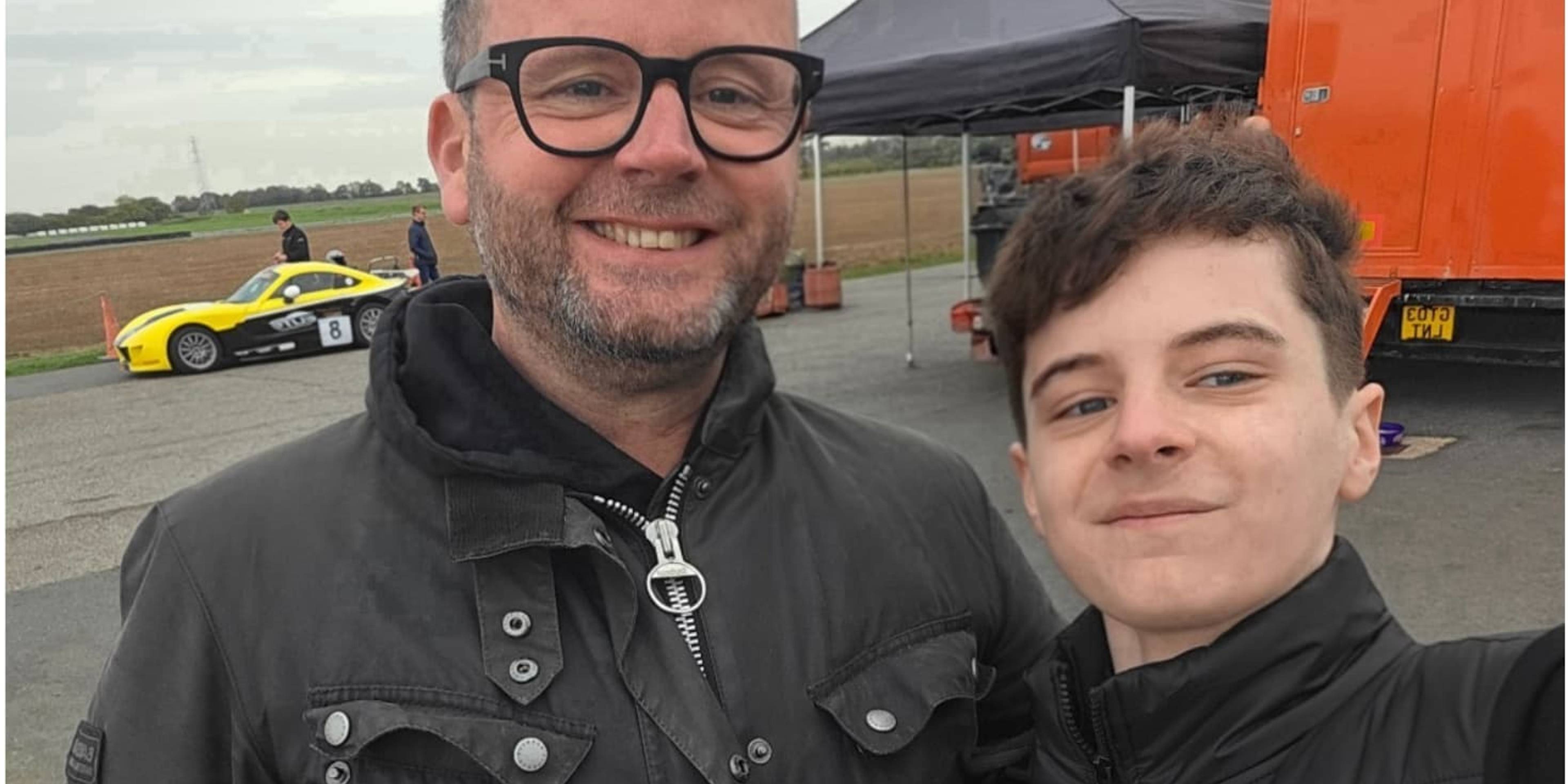
Hello! I’m Barnaby Brewer. I’m an aspiring 15-year-old racing driver and I’ve overcome childhood anger and challenges at school to get me and my family back on track.
(Explainer: I’ll mention Sim Racing in this piece. I use a real steering wheel and pedals with a bucket seat in a metal framed “rig” to control a highly realistic simulation of a race car on my computer. Then I race against people across the globe.)
Four weeks ago, I reached the final of a prestigious junior motor racing scholarship, helping me to clock up one million views of my videos on social media. Only four months ago, I completed a week-long summer course aimed at getting Sim racers like me into real-life racing, including understanding the media and financial side.
But four years ago, I was so angry with life that I’d have never thought it possible to look forward to a career in motorsport or build the online following with which to attract the sponsors I need to fund a race season in 2026.
Looking back, my autism should have been obvious. My nursery school observed I was more interested in discussing Saturn with adults than playing with children (and it is more interesting, obviously). After my first term at school my reception teacher didn’t see cause for concern. In Year Four, when a teacher observed I might need a hearing test as I didn’t seem to listen, neither my parents nor teachers were able to recognise that those struggles related to ADHD.
By the time I was a 10-year-old in Year Five, I was angry. I didn’t struggle with Covid lockdown. Indeed, I enjoyed being left to my own devices to learn when and what I could, without the worry of social or academic pressures and with my headphones on. But I did struggle after lockdown.
When I went back to school to complete Year Five, I threw enormous strops at the smallest thing. Never at school, always at home. My parents understand now that was a sign I felt secure at home but at the time it made them frightened and worried.
Sometimes my anger would become physical, towards my mum, my brother and sister, but usually to my dad. And sometimes, towards myself. I didn’t want to hit out. I was usually deeply ashamed soon after, sometimes to the extent I questioned the point of living. But it was a knee-jerk, natural response to the frustration bubbling up inside me.
In Year Six, my parents discovered I was being bullied in school. It’s not that I was hiding the fact I was being bullied from them, more that I didn’t recognise what was happening as bullying. When parents and school stepped in, the bully moved onto others. I felt relieved it wasn’t me anymore but guilty my classmates were now victims. The anger continued to grow.
School still didn’t see any of the anger I displayed at home, but did respond to my parents’ appeal for help. An introduction to Tooled Up Education was made and our journey began.
Motivate
As my GCSE syllabus has taught me, Benjamin Zephaniah said: “As a child I suffered, but learned to turn dyslexia to my advantage, to see the world more creatively. We are the architects, we are the designers”. Now, I’m just as positive about who I am and where I’m heading.
Mum tells me that on the drive home from where the psychologist diagnosed my ADHD, I said, "So I am not going mad!". I am now comfortable with myself and confident. I know who I am and why I am. I still occasionally struggle with stress, mostly in school when surrounded by loud, confusing humans (also known as people my age!). But I know how to better cope and the stress itself isn’t every day anymore. Stress, while unpleasant, can be a good thing. It’s your body telling you that what you’re doing is too much. I’ve learned to listen to it and speak up.
I’ve also found a coping mechanism. Sim racing.
When I was still angry, my dad brought home a Logitech racing wheel. Lots of parents assume video games are the source of anger. Dad says he thought that driving games would at least help develop a more useful skill than shooting things (which is a very Dad thing to say).
The feeling of driving the same route again and again, searching for a tenth of a second each corner just clicked a part of me I didn’t know about. It became my way to vent and cope while having fun and getting my brain the dopamine I’m told it needs.
Sim racing has developed from a coping mechanism to become a part of me, an extension of my personality, and I now have a specialist Sim set up. As ‘cringe’ as it may sound, my neurodiversity is a superpower in racing. My brain is suited to taking in all the data and engineering information I need to go faster. And my ADHD hyperfocus means I can come home from school exhausted, find the burst of energy to practice for an online competition and make a video about it.
Neurodiversity is part of my social media videos, not the point of them. I’m proud of who I am and I’m not afraid to speak up. While I do get the occasional unkind comment as is inevitable with social media, I have cultivated a kind and engaged community of Sim and motorsport fans.
I also seem to understand what the algorithms on social media platforms are, what they like and how I can use them for growth. I already have over 13,000 followers and more than 1 million views of my videos. Which is vital because my summer course taught me you can be a great driver with loads of potential, but if you haven’t got the online following to attract sponsors then you are unlikely to make it to the starting grid: a season in one of the three national championships for 14-17 year olds costs at least £40,000 and as much as £140,000!
In October, I entered scholarships for the Fiesta and the Ginetta championships. They’ve launched the careers of many pro drivers, including F1 superstar Lando Norris. Both assessed us for driving ability, fitness, resilience and media skills. And though I’d never been in a real car before, I made it to the final day of the Ginetta competition that was eventually won by the Dutch national karting champion.
Vlogging about that on-track success added variety to my social media content and I was invited to join Phoenix Sim Racing, a team representing differently abled drivers. We competed in November’s Race for Mental Health, a 23 Hour Sim endurance event that raised over £50,000 for the charity Mind and a total of around £440,000 over the last 7 years.
Race organiser and famous YouTuber, Jimmy Broadbent, has had his own battles with mental health. Now in his 30s, he’s getting his chance in professional motorsport sponsored by Bilstein. After gaining my motorsport licence this month, having had support and intervention much earlier in my life than Jimmy, I’m ready to start my first race season at only half his age.
Support
Back earlier in my journey, my parents were as frightened and lost as I was angry. Here are some things that made a difference to us on our family journey which I hope can help others in theirs.
First, we had to deal with my anger. And that meant my Dad had to deal with his response. Having attended the angry child webinar from Tooled Up Education, he had the courage to admit to himself he was making it worse.
Against all his instincts as a child of the 1970s, he learned to leave the room rather than require me to leave it, to step back rather than forward. He learned that however severe the threatened sanction, I was never going to apply logic in the moment: we laugh now how we once managed to turn a threat of one day “without computers” into two days and eventually two weeks, all within minutes of me erupting. That was definitely a turning point.
Dad learned how to change his behaviour to give me the space to be angry and the time to calm down, creating the opportunity to talk later about how I felt. By then, there was less need for sanction as I was already showing remorse, meaning we could focus on what I could change next time.
Mum weighed in to support me and Dad by reading everything she could about how to address my anger before it reached bursting point.
We became a lot more of a sweary house. Being allowed to swear angrily in the house (but not elsewhere) was a great way to vent my anger and reduce it before it became physical. It still is. We don’t care if other people judge us for it because it works for us.
Mum learned that she would not put the idea of suicide in my head if she asked me about it. And we did talk. She remembers her relief when the psychologist told her that by asking me about suicide, she had taken the single biggest step a parent can to reduce the risk of it happening, which I am told is particularly high for boys with my characteristics.
A teacher was brave enough, after hearing in the staff room about our problems at home, to draw on her own experience of having a child with ADHD and suggest to Mum it was something she might look at for me. A psychologist was found and I got a shiny ADHD diagnosis of my very own.
We know parents who shy away from diagnoses, for fear of negative labelling or children who keep it quiet. For me, the diagnosis was a big part of the solution. Not because one can get medication or, as many of my friends point out, extra time in exams. (By the way, I’ve found medication to be helpful, but use it on my terms). But having a label felt like a big step to understanding myself and helping others understand me (however inaccurate putting a spectrum under one name is).
I remember reading an Umbrella Gang comic from The ADHD Foundation (a neurodiversity charity which unfortunately closed a few months ago), looking at the characters, pointing, and saying, “That’s like me!”, “I do that!”. Just knowing there was someone (even fictional) out there like me meant a lot in helping me become happy again. That’s why the charity featured in many of the liveries I designed for my virtual racing cars.
I moved school in Year Seven, to a mainstream school, where the head of SEND was on the leadership team and the needs of pupils like me were a standing item at every weekly staff meeting. The adjustments I needed were communicated to every staff member when I joined. In the early days, the learning support team sat in on lessons to help my teachers learn how best to help me.
If the learning support team agreed something was unfair, maybe homework that would take me longer than the set 20 minutes because of my processing speed, or a teacher hadn’t realised how I might interpret an instruction differently, they would back me up to reach a sensible solution. It helped my learning and nurtured my mental health. When I was in the wrong, because I felt secure enough to allow my anger to occasionally show at school, I learned to accept the consequence and amend my reactions. Hey, the school even made me Deputy Head boy!
And it was those daily interactions that led that amazing learning support team to question the previous assessment that I had ADHD but not autism as well. They were right. On many tests I didn’t score as ‘autistic’, but when adjusted for ADHD it was screamingly obvious to the psychiatrist. Coming to understand how one impacts the presentation of the other has played a huge role in getting even more comfortable with why I am like I am and explaining that to others.
So, for example, as GCSEs approach, I have the self-awareness and self-confidence to assert that, as an autistic person, I have an unshakable conviction that school is for school and home for home. So, for me, break times are not better spent taking a rest as they are best used to get what needs doing done, so I fret less about how much I must do when I get home.
And when I do get home, a calm home where we’ve all learned a lot about ourselves and each other, I can apply my maths and physics to my racing and my imagination and language to content creation. And that’s when I feel at my happiest.
I hope you have enjoyed learning about me and my family, my interests and my journey. If you have a child who might like to chat to me, or you are a parent yourself and wish to talk to my parents, please ask the Tooled Up Education team for our contact details.
If you would like to follow me on Instagram, TikTok and YouTube, I am there under the handle: @payattentionbarnaby
Finally, If your company would like to sponsor me to race in the BRSCC Fiesta Championship in April 2026 and work with me to help more parents find support that has made such a difference to me, I’d really love to hear from you and you can email me at attention@barnabybrewer.racing
Are you a Tooled Up member?
Any parent or educator interested in tuning in to the webinar on managing anger which Barnaby mentions can find it here.
You might also be interested in:
Helping Autistic Children and Young People Accept Themselves and Their Diagnosis
Neuro-Affirming Resources to Help Young People Understand Neurodiversity
A Quick Guide to Neurodiversity (and Related Tooled Up Resources)
Barnaby is our first teen contributor to Wednesday Wisdom, but we'd like more! Do you know a young person who'd like to write about their story? If so, we'd love to hear from you. Please get in touch!