Reflect
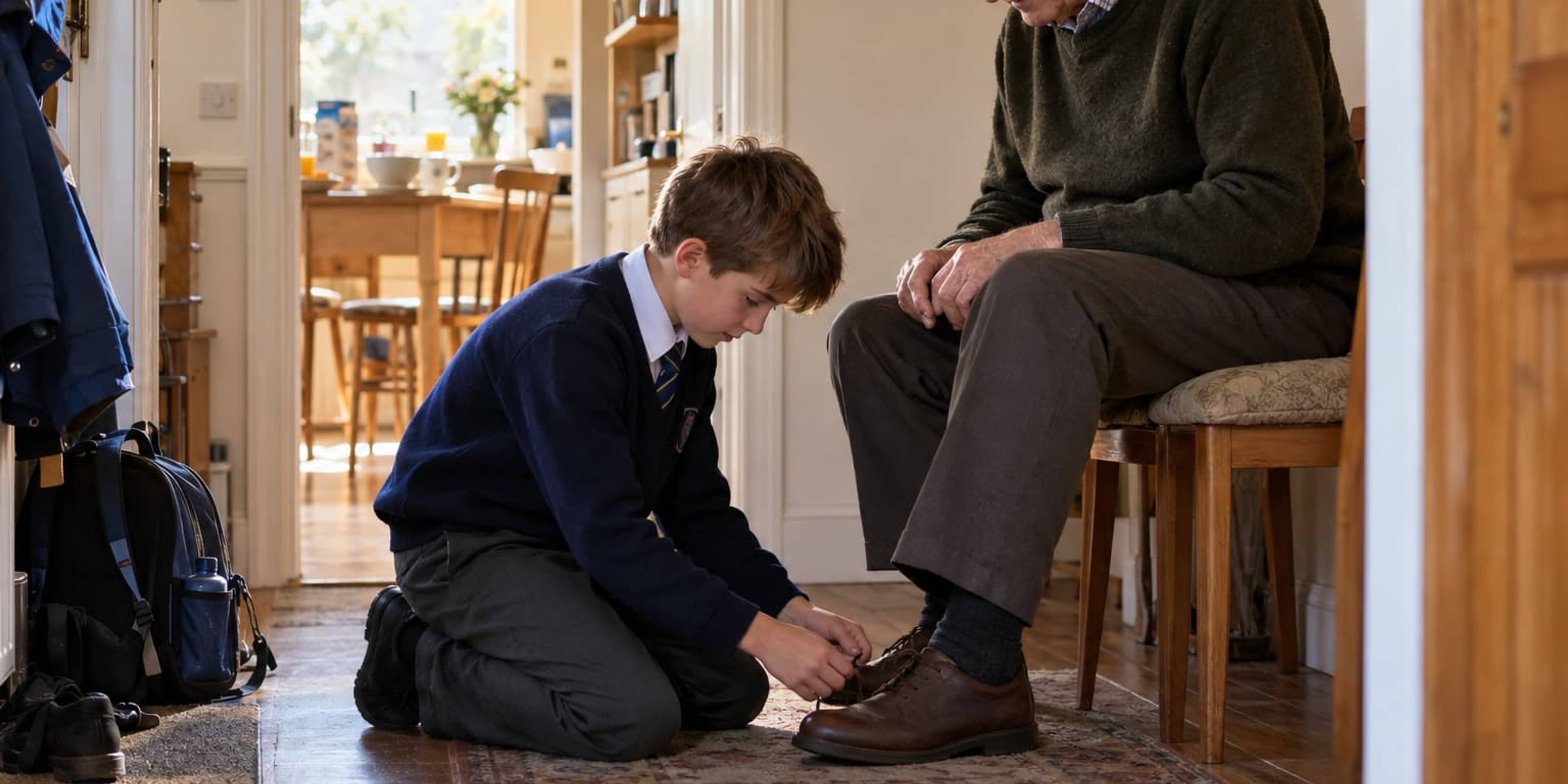
Behind many front doors this evening, someone will be measuring out medication, helping a parent up the stairs, calming a sibling’s meltdown, or quietly checking that Mum has eaten. Often that someone is a parent who hasn’t had a proper night’s sleep in years. Sometimes it is a twelve-year-old who will still hand in their homework tomorrow, or won’t, and won’t say why.
This week, I want us to turn our attention to carers: the adults, parents and children who look after a family member who is ill, disabled, or struggling with their mental health or addiction. Caring is an act of love, but it can come at a cost. Compassion for carers, and from carers towards themselves, may be one of the most powerful things we can offer in our school communities and workplaces.
According to Carers UK, around 5.8 million people in the UK provide unpaid care, worth an estimated £184 billion a year – much of it given quietly, unseen, in family homes. Young carers are harder to count. The 2021 Census found about 120,000 in England and Wales, but an analysis of three UK longitudinal surveys, which asked young people directly, puts prevalence at almost 12%, so around 940,000 children. Action for Children estimates 800,000 aged 11–16 in England alone.
Why the gap? Many children don’t see themselves as ‘carers’. It’s simply what they do for the people they love, and families may fear judgement. Schools often don’t know either: the 2023/24 school census recorded around 54,000 young carers, yet 72% of schools recorded none at all. If a school records no young carers, the question isn’t ‘Do we have any?’ It’s ‘Have we made it safe for them to tell us?’
Many young carers are proud of what they do, and caring can nurture empathy and maturity. But the evidence on the costs is sobering. Department for Education figures analysed by Carers Trust show young carers missed around 23 days of school in 2023/24, compared with 13 for their peers. In class, 44% struggle to study for tests because of caring, and almost a third are regularly late. A 2025 study found young carers had lower attainment at Key Stage 2 and GCSE, even after accounting for disadvantage. Research by UCL and Carers Trust found young adult carers are 38% less likely to get a degree.
The Sutton Trust’s COSMO study found 56% of young carers experience psychological distress, against 43% of peers. Almost half have been bullied in the past year, and eight in ten feel lonely in the summer holidays. In the Carers Trust’s Caring and classes report, young carers say that instead of getting help with lateness and missed work, “all too often we are punished”.
For parents of disabled children, caring sits on top of parenting and the exhausting work of chasing support. Work and money are hit hard: research cited by the charity Sense found 62% of parent carers had given up work or cut their hours, losing an average of £21,174 in family income. A survey by Contact found 72% of parent carers had experienced mental ill health because of isolation. The Disabled Children’s Partnership notes that more than half of siblings take on extra caring when support isn’t there.
Last week, I met a mum who was frazzled and exhausted, having barely slept. I assumed her six-year-old was the reason. He wasn’t. She was working while caring for her parent, who has Alzheimer’s, and her mind and energy were being pulled in every direction: the pain of watching someone she loves decline; guilt at not being there for her son as much as she wanted; and the struggle to work on little sleep because worry kept her awake.
Her story is far from unusual: many parents care for a child and an ageing parent while holding down a job, and Carers UK’s State of Caring 2025 found 35% of working carers had cut their hours because of caring. From the outside, she looked like any other tired parent at the school gate. We rarely know what someone is carrying and a little compassion can go a long way.
Motivate
Understanding the challenge is one thing; feeling moved to act is another. Here is why compassion, including the compassion carers show themselves, can make such a profound difference.
Compassion means noticing suffering and wanting to ease it. For many carers, the hardest person to extend it to is themselves. Carers often talk about guilt: for losing patience, for longing for time alone, for occasionally resenting a role they would never give up.
Here the research is genuinely encouraging. In a study of parents of autistic children, Kristin Neff and Daniel Faso found that self-compassion was linked to greater life satisfaction and hope, and to lower depression and parenting stress – and it predicted parents’ wellbeing over and above the severity of their child’s needs. A recent review of studies with parents of disabled young people found that those who showed self-compassion reported lower levels of psychological distress, shame and guilt.
Even brief support seems to help. In a small feasibility study, a four-week online self-compassion programme for parents of children with developmental disabilities led to increases in self-compassion and wellbeing and reductions in depression and stress. It’s early evidence, so promising rather than conclusive, but the direction of travel is clear. I was particularly struck by a recent qualitative study with caregivers of children with physical disabilities. It found that self-compassion helped parents balance ‘gritting through’ with noticing their own emotions and needs, balance isolation with connection, and balance self-judgement with grace and self-advocacy. That framing matters: self-compassion isn’t self-indulgence. It is what allows people to keep going.
If there is one thing I hope we take from all of this, it is that caring is so often invisible until we choose to look for it. Many carers, and children especially, would never use the word about themselves. So when a pupil arrives late again, looks exhausted, hands in homework unfinished or never seems to bring friends home, it is worth pausing to wonder whether we are seeing responsibility rather than defiance. Curiosity before consequences can change everything for a child.
Compassion for parents is protective for children, too. When we support a parent carer, with a kind word at the school gate, an offer to help with the school run, we are supporting every child in that home, including the brothers and sisters whose needs are so easily overlooked. And we can remind carers, gently and often, that rest is not a reward to be earned once everything is done, because it never is all done. Breaks are a need, not a luxury, which is why Carers UK continues to call for carers to have a legal right to regular, meaningful breaks.
Finally, self-compassion can be learned and modelled. When a parent carer speaks to themselves kindly: “This is really hard but I am doing my best”, their children learn that struggling is not the same as failing. And for a young carer who has spent so long putting others first, hearing a trusted adult say, “I can see this is tough for you, but I am here to help”, can be truly transformative.
Support
Let’s get practical. Here is what schools, families and the wider community can do, and where to turn for help.
With October half-term about to begin for many families across the UK, it’s worth remembering that a week off school is not a holiday for everyone. For most children, half-term means lie-ins, time with friends and a welcome pause from the classroom. For a young carer, it can mean the opposite: more hours of caring, fewer chances to see friends, and the loss of the one place where they get to simply be a child. School gives many young carers structure, trusted adults and a break from responsibility; without it, the days can feel long and lonely. Research by Action for Children and Carers Trust found that eight in ten young carers feel lonely during the holidays, and even a week-long break can bring a smaller version of the same pressures.
For parent carers, half-term can be one of the most demanding weeks of the term rather than a rest. School is often the only regular respite a parent of a disabled child gets, and when it stops, so does the time they would otherwise use to work, attend appointments, catch up on sleep or look after the rest of the family. Holiday clubs and childcare that can meet a disabled child’s needs are often hard to find, and a change in routine can be unsettling for children who rely on predictability, which can mean more distress, more disrupted nights and even less of a break for everyone at home. Brothers and sisters may quietly pick up more of the load.
So, before the holiday begins, a few small acts of compassion can help. Schools might check in with known young carers before they break up, make sure they know who to contact if things get difficult, point them towards local young carers’ services, many of which run groups and trips, and go easy on holiday homework. Friends, neighbours and relatives can help too: offering to take a sibling to the park for an afternoon, dropping round a meal, or simply sending a message that says ‘thinking of you this week’ can make a parent carer feel a little less alone. And if you are a carer yourself, please be gentle with yourself.
In general terms, schools are uniquely placed to make a difference. Teachers see children every day; they notice the yawns, the forgotten PE kit, the homework that arrives late or not at all. Yet, Carers Trust’s 2024 research found that just 46% of teachers think their school provides the support young carers need, and almost one in four young carers say there is ‘no support at all’ for them in their school, college or university. So what can they do?
Identification comes first. Schools can make it easier for pupils to come forward by talking openly about caring in assemblies and PSHE lessons, adding a simple question about caring responsibilities to admissions and pastoral forms, and helping staff recognise the less obvious signs: persistent tiredness, lateness, anxiety about a parent’s health, or reluctance to go on trips and stay for clubs.
It is worth remembering that the children least likely to be identified, younger pupils and those caring for someone with a mental illness or addiction, may also be the ones most worried about what telling someone might mean for their family. Reassurance that the aim is support, not judgement, matters enormously.
Carers Trust has argued that every school should have a young carers lead and a young carers policy. A named lead gives pupils one trusted adult who understands their situation, so they don’t have to retell their story every time something goes wrong at home. It also gives the school a way to coordinate with families and with local young carers’ services, many of which run groups, trips and one-to-one support. The Young Carers in Schools programme, run by Carers Trust and The Children’s Society, offers free resources and a framework that schools can use to build this into whole-school practice.
This is where schools can make the biggest difference – and where the risk of unintended harm is greatest. According to Department for Education statistics, young carers have more than double the rate of suspensions of their peers, and many describe being sanctioned for lateness or missed homework that stems directly from their responsibilities at home. At a time of intense national focus on persistent absence, it is worth asking why a child is missing school before reaching for consequences. Looking closely at the data can be revealing. When MYTIME Young Carers, a member of the Young Carers Alliance, collected attendance data from five secondary schools, young carers’ absence rate was nearly twice that of all pupils, and their persistent absence rate more than double. Where senior leaders review young carers’ attendance and attainment regularly, difficulties can be spotted early and support put in place before a child falls too far behind.
Often it is the small things that keep a young carer in school. A homework club or quiet space at lunchtime means work can be done before they head home to their responsibilities. Some flexibility on deadlines during a difficult week, permission to keep a phone on at break to check that a parent is safe, or a discreet time-out pass for moments when worry becomes overwhelming can all ease the pressure. Giving advance notice of trips, parents’ evenings and exam dates helps families arrange care. These gestures cost us very little, but they can be the difference between a young carer staying in school and slowly slipping away from it. We also know that it is vital to give young carers a voice and agency in the support they receive as a carer. Asking them what they need, rather than making assumptions, is key.
Caring doesn’t stop at 16, and the evidence suggests young carers’ choices can narrow as they get older. Carers UK reports that young carers are 29% more likely than their peers to go to a university or college within a 30-minute drive of home, and, as we have seen, they are much less likely to complete a degree. Careers guidance that takes caring into account, early conversations about post-16 options and extra support at key transition points, from primary to secondary and from school to college, can help ensure that a caring role shapes a young person’s future without limiting it.
Finally, schools can extend compassion to the adults as well. Parent carers, and parents who are themselves unwell, are often stretched to breaking point. Flexible meeting times, a phone call instead of a formal letter, patience when forms come back late, and an awareness that the siblings of disabled children may be carrying responsibilities of their own all make a difference. Marking Young Carers Action Day in March and Carers Rights Day each autumn gives schools a natural moment to celebrate the contribution carers make and to invite more pupils and families to come forward. If you work at a school in England, you might also consider involvement in the Young Carers in Schools (YCiS) programme. Run jointly by Carers Trust and The Children’s Society, it offers free tools and training and celebrates the great outcomes many schools achieve for young carers.
For parents and carers at home, many of the same principles apply. Talking about the caring situation in an age-appropriate way helps children make sense of what is happening and lets them know it’s OK to have mixed feelings. With your child’s agreement, telling their school about any caring responsibilities means staff can respond to their needs. It is also worth deliberately protecting childhood by ring-fencing time for play, friendships and clubs, which are the very things young carers most often miss.
No one should have to do this alone. A number of excellent charities work in this space. Carers Trust supports local carer services and young carers’ projects across the UK, while Carers UK offers advice, information on carers’ rights and an online community for adult carers. Action for Children and The Children’s Society both provide support for young carers, along with resources for schools and professionals.
For families with disabled children, Contact runs a free helpline and a Listening Ear emotional support service for parents and carers of children aged 0–25, while the Disabled Children’s Partnership and Sense carry out research and campaign for better support. Your local council should also be able to point you towards nearby carers’ centres and young carers’ services. For children with siblings who are disabled, have special educational needs or a long-term condition, the charity Sibs can offer support and guidance.
The people who care for others are so often the last to be cared for themselves. This Wednesday, perhaps we can each bring to mind one carer in our community, family circle or workplace, and find one small way to say: I see what you do and I am here to listen or help in any way I can.
Are you a Tooled Up member?
If you are caring for an ageing parent, you might want to watch our webinar with Jana Meier from Carents, a UK organisation which aims to support the many people in your situation.
If you are a foster carer supporting a teen or teens, please join us at lunchtime today (12:30pm BST) for a webinar with Adrienne Katz on Supporting Fostered Children and Young People Online.
We've got numerous live events coming up. Please join us for any that interest you:
From Learner to Licensed: How Parents Can Help Young Drivers Stay Safe - 9th November, 12:30pm-1:30pm GMT
Break the Silence: Understanding Bullying’s Lasting Impact and Taking Action in Schools - 17th November, 6:00pm-7:00pm GMT
School Attendance: What Parents Need to Know - 19th November, 12:30pm-1:30pm GMT
What Educational Neuroscience Can Contribute to Every Child Thriving - 24th November, 12:30pm-1:30pm GMT
Online Gaming - Exploitation and Harms: What Parents and Educators Need to Know - 12:30pm-1:30pm GMT