Reflect
One of my favourite parts of working at Tooled Up is talking to parents. Families often come to us with a specific challenge. But some of the conversations I enjoy most are with parents who feel things are going pretty well in family life but they want to know how they can do even better.
Recently, a busy father of three got in touch. His eldest daughter was 11 and preparing for the transition to secondary school, and he was wondering how his parenting might need to evolve alongside the changes taking place in her life. He travelled extensively for work, but when he had a little downtime, his focus was on being the best father he could be. You may be thinking what I was thinking: his daughter is a lucky girl. She is clearly adored and growing up with a parent who is thoughtful, supportive and deeply invested in understanding her as she grows and matures.
Another memorable conversation was with a father facing a different challenge. He spoke candidly about finding one of his children (a 12-year-old daughter) difficult to parent. Their personalities often clashed, interactions could quickly become tense, and they sometimes went days without speaking. He worried about the effect, if any, this conflict was having on their relationship and on her wellbeing. His question was simple: “How can I do better?”
Although these fathers found themselves in very different situations, they were ultimately grappling with the same issue: how can men build strong, positive relationships with their daughters as they grow up in an increasingly complex world? How can they nurture the kind of connection that provides a secure foundation for future relationships? And what role can they play in shaping their daughters’ developing sense of self?
With Father's Day approaching here in the UK, it feels like a timely moment to reflect on the questions these dads posed. Are there any nuggets from research, each asked, that could help these dads feel even more connected to their daughters?
Motivate
Before exploring what research tells us, I should probably acknowledge a personal bias. When those fathers posed their questions, I found myself reflecting on my own experience of being fathered. I was fortunate to grow up with a father who adored me, encouraged and somehow managed to make me believe that I could do whatever I put my mind to.
Of course, personal experience is not evidence. Plenty of children thrive without fathers, and not every father-daughter relationship is positive or straightforward. Yet my own experience made me reflect on both research and stories from my own childhood that these days might appreciate.
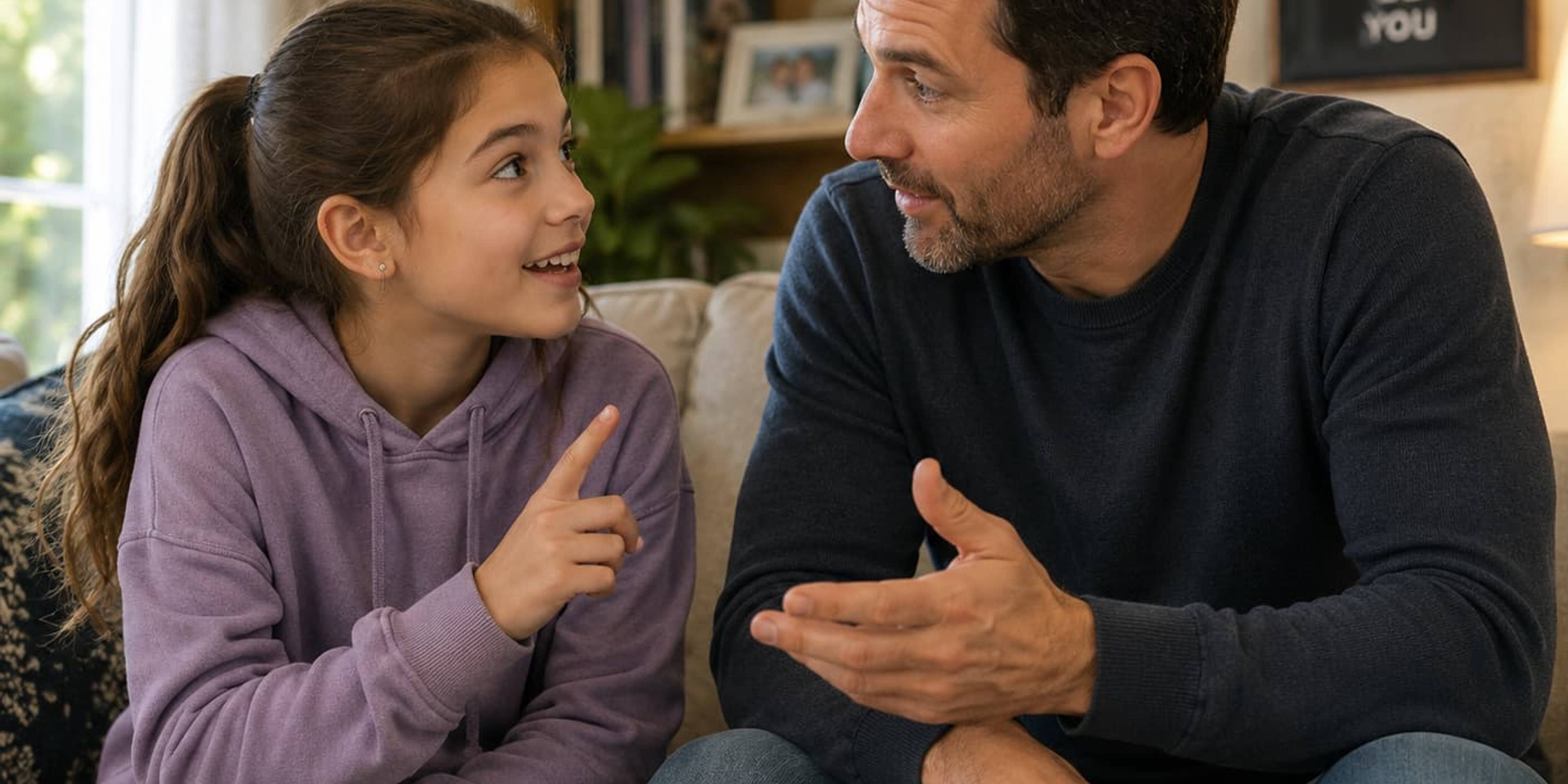
First of all, I would say to these dads and, frankly, any parent, that your children will always remember that you cared. They will always remember feeling like they were important to you and that they matter. They will recall all the times you downed tools to listen to what they had to say, the times you asked them for their viewpoint or leaned in to learn more about what made them tick.
They will remember the times you were encouraging rather than critical and how you offered feedback that felt heartfelt and motivating. Time spent with your tween daughters feeds into their self-esteem and self-worth.
Show curiosity in their world; the books they enjoy, the music they listen to, the friendships that they find fun or trickier. Show them you enjoy their company, value and insights and enjoy easy chats about big topics. “I have heard they are banning social media for teenagers in the UK, have you heard about that? What do you think?”, “What kind of summer are you looking forward to? How would you like to feel at the end of it?”, “I have read about children using AI for advice. Have you ever heard of children using chatbots?” Stay calm, constructive and curious in the conversations. Model active listening and show her that you are interested in what she has to say.
Share some insights from your own childhood and teen years that bring them to laughter and that demonstrate you too, understand what it is like to be young, curious, wanting that first kiss, worried about how others perceive you or how your body was changing. I remember being 13.5 years old and asking my father during an opening in one of these chats if he was annoyed with me after my big reveal that I had enjoyed my first kiss at summer camp. “Of course not! I am happy for you. Those are normal things to do. That is part of growing up”. I recall the relief that I could tell him those things and that he wasn’t angry, upset or wanting to curtail that curiosity in some way. Men often struggle to talk to daughters about topics such as puberty or menstruation, but it is healthy to normalise chats that your daughter is comfortable raising or talking about. It doesn’t have to be mum or a big sister who always fetches menstrual products. It can be Dad who adds them to the shopping or stocks the family bathroom.
Attune to your daughter’s strengths, hobbies or interests rather than assuming she enjoys the same things as other children in the family. Celebrate her individuality and offer feedback on what you notice and value about her. Inject some novelty into the praise that you give “I just wanted to say, Jessica, I am really, really impressed with the way you handled your homework and your sporting matches this term, that was tough!”. “Mia, I just wanted to tell you that I really enjoy all your ideas, I love how you think critically about things”. My own father used to make me feel like he valued my ability to politely point out perceived inequities between siblings in our home and, as such, it made me feel that my opinions were worthy and that he enjoyed the fact I advocated for myself. Parental feedback, when heartfelt and specific, can really motivate and hold a mirror up to children in a way that imbues terrific confidence.
Things like body perfectionism, dissatisfaction, low-self-esteem and disengagement from sport are things we want to avoid occurring in this age group as far as possible, and we can start to take early preventive steps during this stage. When you see your daughter participating in exercise or sport or simply enjoying moving her body, comment on it. “You looked so strong out there today! So confident”, “I love seeing your confidence grow after you have been playing tennis, it is great to see your progress”. As you can see, the emphasis should be on body confidence, gratitude and functionality – zero mention of weight, appearance, diet or even how pretty she is. Is she happy? Does she feel comfortable? When we look in the mirror, parents can also usefully model self-talk that is positive and compassionate.
When your daughter struggles, offer affection and understanding. Really, really listen not just to the words she is saying but to her body language. Coach rather than simply soothe. Avoid offering a million solutions and see if she can create some little goals for herself that could be applied to the situation in hand.
If you argue, argue well. That means listening to one another, modelling honest open communication and saying sorry when necessary. We have all messed up!
As I said to the dad who didn’t speak to his daughter for days after a spat, one day she might end up in a relationship with a partner who does the same thing. Would he be happy with that? “No, he said, I certainly would NOT be”. Owning up to our mistakes or requesting a re-run of a conversation that didn’t go well are all steps that will likely enrich any relationship connection.
As I write this, I am mindful that some children will be growing up without a loving, involved father, while others might be navigating loss or bereavement. Please know that even one or two trusted adults in a child’s life, whether it is an aunty, uncle, godparent or close family friend, can make a profound difference to children’s thriving. Feeling psychologically safe at home, experiencing consistency, warmth and love, all strongly correlate with children’s happiness and resilience. They are very likely to thrive when they inhabit a social ecosystem that features a diversity of adults who adore them!
Support
Now to the biggest story of the week. I can’t resist mentioning it as it’s something I’ve been thinking about a great deal. Tweens and teens are talking about little else, while adults are grappling with its wider implications: a social media ban is coming to Britain for children under the age of 16.
Given that around nine out of ten children own a phone by the age of 11 and 86% of 10-12 year olds seem to have a social media or messaging account, I welcome the fact that the ban tells parents that social media is not for children.
So, what exactly is going to be banned? From what I’ve read over the past few days, the proposals would cover platforms such as Snapchat, Instagram, YouTube, X and Facebook (although the latter two seem far less popular these days, which makes their inclusion an oddity perhaps?). Some gaming platforms may also be affected, though exactly which ones remains unclear. Interestingly, WhatsApp appears to have escaped the net, for now, as has Roblox, a game which is hugely popular with younger children and teens, and which has faced significant and widely publicised challenges around child safety.
At this early stage, there are plenty of unanswered questions. How will age restrictions actually be enforced? Will teenagers simply find ways around the restrictions, given they have always been remarkably resourceful? (Spoiler: around 60% of Australian teenagers have reportedly already circumvented their country’s ban.)
If Britain’s young Snapchatters are not allowed to continue snapping, many are likely to find illicit ways of editing age verifications, or they might move digital chats elsewhere, onto messaging platforms like Discord (known to be used for ‘off platforming’, where someone encourages a child to move their conversation away from moderated platforms onto a more private communication space). When online activity is displaced in this way, beyond the awareness of parents, there is a real risk that online safety concerns become even harder to monitor.
The danger of a total ban is that adults start to relax, thinking a giant, all-encompassing panacea has arrived that will protect our children from all exposure to digital risks and harms. Such over-reliance can mean online safety chats could take a back seat at home and in school.
Never mind teen compliance with the ban, will parents adhere to it? Millions appear to be applauding this week’s news. However, my suspicion is that any parent relaxed enough to allow their nine-year-old onto social media in the first place may be unlikely to draw the line at a VPN (Virtual Private Network). If that proves to be the case, the familiar, pestering cry of, “Why can’t I have a smartphone, everyone else has one?” could soon be replaced by a new refrain as of spring 2027: “Why can’t I have a VPN? Everybody uses them”.
As academics and researchers begin to process this news, a range of fascinating expert perspectives is quickly emerging. Early analyses provide plenty of food for family discussions over the months ahead. Which expert do your children and teens agree with and why? What do you think? We’d love to hear from you. To be continued.
Are you a Tooled Up member?
As well as all the links throughout this week’s article, parents with daughters might like to browse through some of these resources:
Parenting a Daughter: Insights from Research and Actionable Tips
Understanding Girls with Dr Tara Porter