Reflect
Rock bottom is not a place you ever want anyone to experience. It is a place where hope feels absent and where life’s complexity, vastness and mysteries are fully exposed. It is a raw place where one feels entirely helpless and vulnerable. Since the last time I penned Wednesday Wisdom, I ended up there, along with family, as we experienced a sudden and unexpected health problem with one of our youngest members.
That is the thing about life. You trundle along hoping nothing too bad ever happens (counting magpies, touching wood) and then it does. The immediate response to the bad thing happening is total shock. You sound like someone in a movie, as you shake your head and repeat lines such as: “This can’t be happening”, “How can this be true?”.
You have so many thoughts racing through your mind at once you can barely make sense of how you feel and then odd, inappropriate ones pop into your head that make you feel guilty and callous: “Will I still be able to attend that 50th birthday on Saturday night?”, “How will I manage work next week with this going on?”. After a few days, it sinks in; that your family is facing an enormous crisis and you need to step up, roll up your sleeves up and see what you can do, in any way possible. You get into emergency mode and skills, long buried and resilience, unexercised, are put to work.
The role of carer within the wider support network for immediate family in such circumstances is a complex one; you must think about your loved ones immediately involved first and put your own worries aside. You need to get practical, organised and be able to communicate with others to describe what the family is going through and to be able to advocate on their behalf. You have no idea of timelines because life has thrown something at you that you don’t understand, but you aren’t sure what it all means yet, what will happen or what the consequences might be. Before you know it, you can’t think straight or remember small details, because your cognitive abilities have been blurred by fear and disbelief.
The anticipatory anxiety is real and whilst trying to cope with the everyday, you are also trying to cope with a terrifying array of ‘what ifs'. You fear telling your own children because you resent having to disrupt their happiness that you have worked so hard to cultivate. You want to mitigate trauma, yet at the same time, perhaps this rock bottom experience contains valuable life lessons for them?
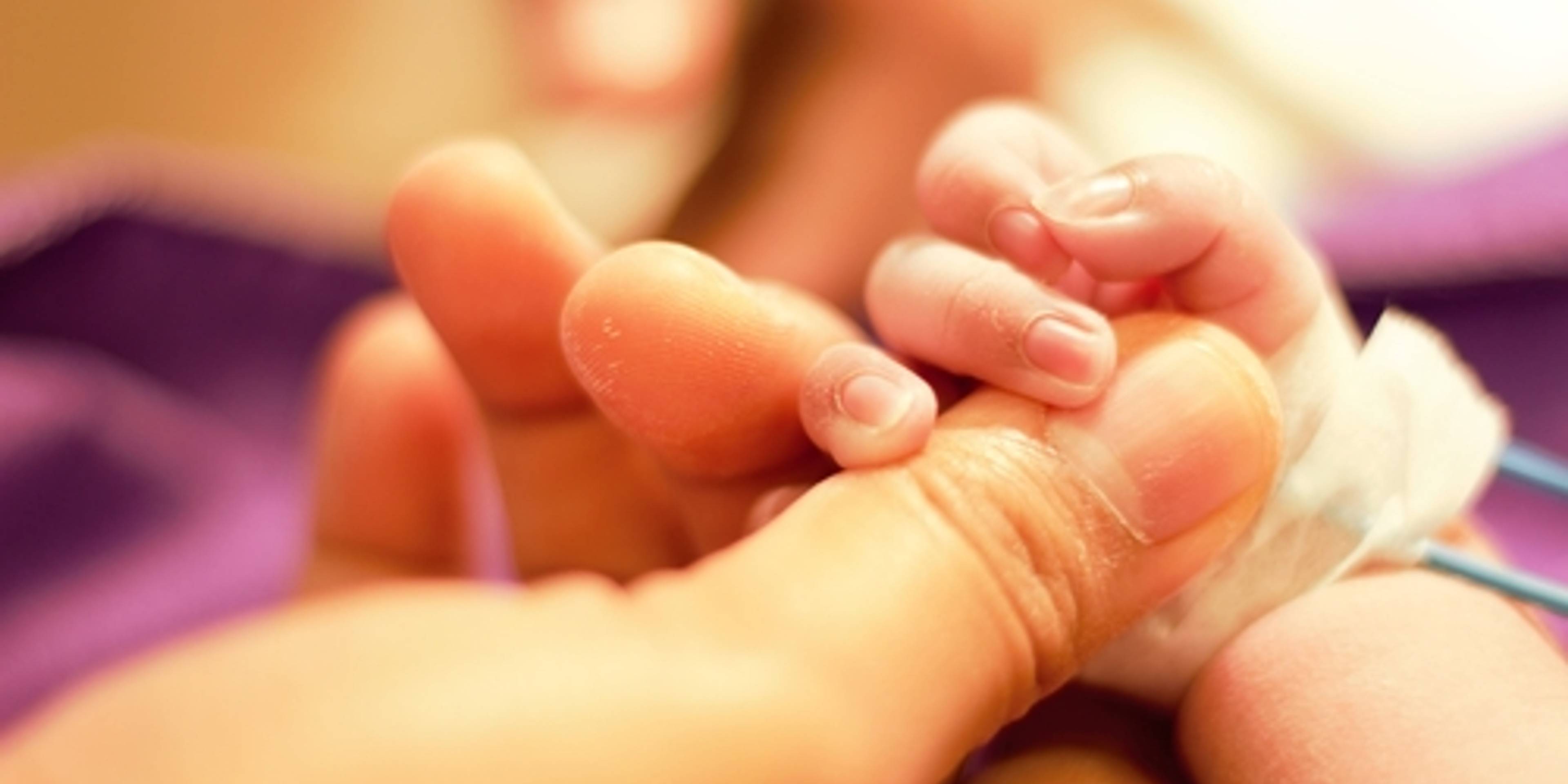
With rock bottom, comes a ghastly foray into landscapes previously unknown. In our family’s case, there were lots of first times; getting into an ambulance, meeting a paramedic, visiting a hospital ward and meeting clinicians in offices. You may also, like us, end up visiting specialist units; circles of hell or hope (depending on outcome) like paediatric intensive care wards or ‘PICUs.’
The PICU is place that is intensely quiet, eerie almost, mainly because its small patients are on ventilators, sleeping or sedated purposefully. Machines hum with clinical precision and monitors constantly flicker. Alarms go off and on and professionals move quickly, with calm competence. As a visitor, your attention is entirely on the child in front of you, but you can’t help looking around (or at least I couldn’t) and wonder what hellish experiences other families were going through. I watched parents sit for hours on end at bedsides. I saw them quietly hold their heads in their hands in the family room or stare into space. You didn’t dare interact with them, as everyone was entirely focused on their own little patient and had no mental capacity or desire for social interaction of any kind. This was a purgatorial place where everyone waits, in quiet hope, unsure of outcome and entirely reliant on clinical expertise, judgement, medical technology, drugs and any or all sources of hope and faith.
Motivate
When fear reaches a kind of intensity, as humans we are wired to hope, to seek solutions, and problem-solve. We also reach out. We tell others. We cry and seek comfort. Perhaps, it is only at rock bottom that the value and meaning of social connection, friendship and support truly come alive?
One of the benefits of social connection is that friends listen; they listen to our story, our re-telling, our disbelief. They listen without judgement. They validate how we feel. They despair with us and hope alongside us. Friendship mitigates us against loss, trauma and fear. It is an extraordinary gift. My friends and the friends of my close relatives stepped up during this emergency in a vast array of ways; kind messages, home-cooked meals, offers of walks around the block and ‘check ins’. They also reached out to their network of supporters and friends and ignited a level of support amongst others that didn’t even know us personally. Before I knew it, prayers were being said five times a day in mosques across London, nuns in convents were pursuing entire novenas for my little relative, Hindu friends had said special healing chants and meditations, Jewish friends had mentioned my loved one at synagogue, Protestant pals at services, had sent ‘arrow prayers’ our way. Our shared humanity and hope transcended any religious, cultural or societal boundary. It was incredibly moving.
As the days shifted, medical certainty that my little loved one was going to die began to dissipate along with our dark despair. Small and inexplicable small shoots of hope arrived like crocuses from the dark earth, and we began to understand that we might just make out of intensive care with a positive outcome.
When trauma arrives, it challenges all assumptions and rocks our beliefs about the world. It is a like an earthquake that rattles and threatens all that we love and cherish and believe to be certain. To cope with the traumatic event, we need to be surrounded by social support, we need to reach out to others and help-seek, need to take care of ourselves, need to be fed and watered and require others’ understanding, empathy and hope.
Trauma can also be processed through re-telling (hence this week’s Wednesday Wisdom, so forgive the self-indulgence!) as it helps us understand what happened to us and creates a sense of coherence through the narrative that we put together. We benefit from the re-telling of the story in a way that highlights the good, makes sense of plot twists, amplifies the humanity and celebrates the characters who played a significant role in the eventual ending (no matter the outcomes). Healing can emerge from stories, and the feedback that one receives to a story (perhaps others feel heard, valued or seen), can help affirm one’s own experience and provide encouragement. Rock bottom experiences ask us to look deep into ourselves, and there, we can find strength and a shiny new sense of perspective. It is a brutal experience and one that changes you, but it can also open one’s eyes to all that matters, to the deep and extraordinary love we have for others and even a deeper self-compassion that frees us up to feel fully human.
Fear can cripple us, but it can also motivate us to love harder and to relish all that being alive has to offer. Gratitude is the game-changer. By starting and ending each day with it, we can locate hope. By modelling it, we teach our children how to live in the world. By believing it, we count all our blessings and feel rich as a result. Crucially, no matter what happens, the glass will always feel half-full and you will able to shore yourself up ahead of any life lessons that are on their way.
Support
If you are reading this and supporting a poorly child or young person, grieving a loved one, or coping with an extremely difficult situation at home or work, know that there are people and communities that want to help you. Your friends, colleagues and loved ones are all in your army and there is a vast support network out there, just waiting for you to reach out.
Over the last few months at Tooled Up, we have supported school communities and families bereaved by staff and student suicide, teen cancer, mental health conditions, road traffic accidents and drugs. Through the provision of support we have learned so much about human resilience, the power of school communities, the extraordinary stamina, compassion and commitment of school staff and just how valuable a resource can be at a time when someone really needs it.
We have resources to support parents and educators, children and families on every topic from preparing for hospital appointments to supporting children through the death of a relative. We have spoken to some of the most eminent psychologists and psychiatrists in the world, delivered talks on every aspect of resilience. We have spoken to parents who have survived unimaginable tragedies, people who have shown extraordinary resilience in the face of trauma and created actionable activities to bring research to life, in the classroom and at home.
But beyond the research, beyond the webinars, beyond the carefully curated resources, there is something even more fundamental. There is community. If you are in a foxhole right now, exhausted by worry, stretched by grief, or simply trying to hold steady in the face of something that feels overwhelming, please remember this: you are not meant to do it alone. Resilience is rarely an individual achievement. It is relational. It grows in shared spaces. It strengthens when burdens are distributed and becomes sustainable when support is visible and accessible.
At Tooled Up, we will continue to support you, to listen and to learn. We will continue to share our own lived experiences and to create practical resources grounded in evidence and compassion. Fear may bring us to foxholes. But together, we can build bridges out of them.
Are you a Tooled Up member?
We're always here to support you through challenging times. Some of the resources below might also help:
A Guide to Grief and Bereavement (and Relevant Tooled Up Resources)
We'd welcome any Tooled Up member to join us at these upcoming webinars:
Living with Loss: Grief Beyond the First Year (March 17th, 12.30pm GMT)
Supporting Young People After Suicide Loss: Guidance for Educators and Parents (May 5th, 12.30pm BST)
School staff might like to look at:
Supporting Students Following a Potentially Traumatic Event
Guidance for Educational Settings Following a Suicide or Sudden Death