Reflect
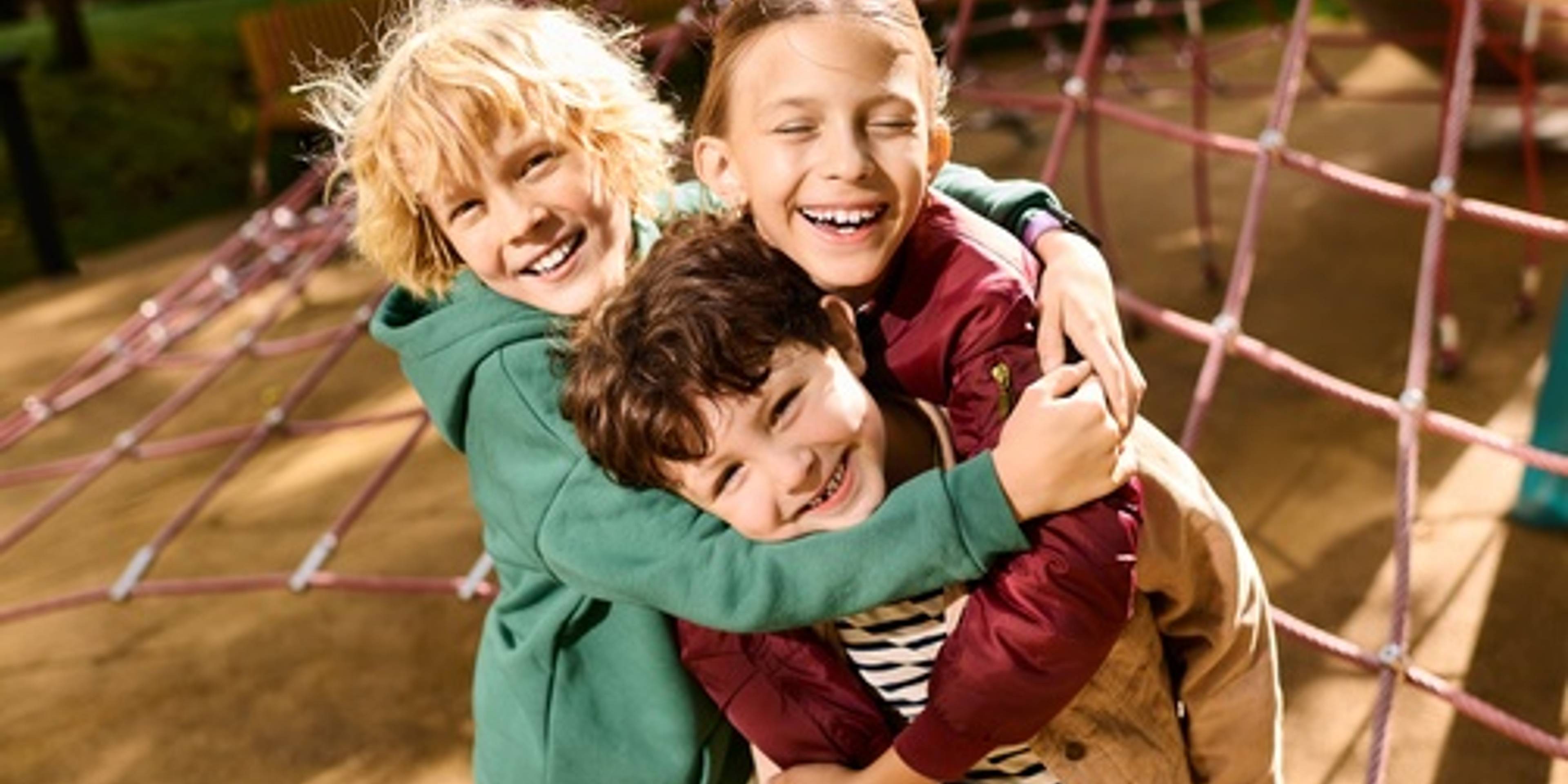
Few things pull at our parental hearts quite like our children’s friendships. We can cope with forgotten PE kits, spelling tests and muddy shoes, but hearing that our child had no one to play with, has fallen out with a close friend, or feels excluded from a group can feel quite painful.
Friendship matters because it gives children more than company. It plays a key role in developing their sense of self in the world and can give them a profound sense of belonging too. They evolve and change through the various developmental stages. In the early years, friendship is often rooted in shared play and fun; by middle childhood, children become more alert to loyalty, fairness and group norms; and by adolescence, friendship is increasingly bound up with identity, intimacy, self-disclosure and emotional support.
At every stage, our role is not to engineer a perfect social life, but to help children build the skills, confidence and perspective to navigate the ordinary ups and downs of relationships. Easier said than done of course. Even since the start of term this year, the team at Tooled Up has heard from parents who are worried their child has no friends, too many friends, the wrong friends, or that they are too shy or bossy when it comes to group dynamics!
A fundamental truth about parenting that is hard to initially accept is that we cannot control who a child gravitates to, who they find fun and exciting, or how they behave in those moments where they are socially interacting. School classrooms, playgrounds and playdates all provide a space to learn about who we are, who we get along well with, and who perhaps we don’t connect as well with. It is all ok.
The journey towards finding new friends can be a little rocky but that is developmentally normal. As a parent of a 20-year-old returning to university this month, I am party to various parent groups online connected with universities and colleges and, believe it or not, parents at that stage worry about the same things: will my young adult be able to make friends, find their ‘tribe’ and avoid loneliness so they don’t want to return home?
So now we realise that many parents feel like they are in the same boat, what can we practically do to support our children at any stage or age? Firstly, I think we should carefully consider how we talk about friendships in family life. How are we setting expectations about them? I waved a young person off to university last weekend and I gave her the same advice as I gave my son the day he started prep school, be yourself and give it time. Don’t rush into settling on friendship formations during Freshers’ week but instead, see how the land lies first.
We have to be careful not to pressurise our children with the expectation that they need a best friend either. One retrospectively useful piece of advice my psychiatrist Dad gave me when starting my senior school back in the day, was that, “You don’t need to be friends with everyone and remember that not everyone will ‘get you’". He also added that getting a best friend might take months or even years. It sounded harsh, but as an adult I appreciate why he said this. He was saying that we can’t always be everybody’s cuppa tea, and you know what? That’s ok. He was also suggesting that we can’t control every outcome and the best thing one can do is to get on with being ourselves.
Motivate
One positive role that we can play as educators and parents is to support children and young people to think about the value of friendships in our lives and how we can identify a good quality friendship. This doesn’t mean denigrating others but just working out what we believe the elements are that make up a healthy friendship.
Whether it is within classroom discussions, dinner time chats, assemblies on the topic or informal conversations in the car, explore together what makes a good friend, what qualities make for a healthy dynamic and what signs might be present when a friendship isn’t really working for us? When we see a good friend, how should we feel?
If you consider this question as an adult, the answer is normally “happy and excited”, or “heard, valued and seen”. On the other side of the coin, if a friendship feels more drain than radiator, it might be time to step away kindly from that dynamic.
Friendship loss can be something our children instigate or are subject to and, no matter what, it can feel painful. We know from the sociological literature on this topic that adolescent girls may feel it more acutely than boys. As parents and educators, our main role when it comes to this situation is to validate children and young people’s feelings. It is sad when a friendship doesn’t work out, but it is important to be both respectful of others’ wishes and feelings and hopefully optimistic that we can and will find other like-minded people out there with whom we can make a connection.
As children move through primary school, friendships often become more organised around shared interests, rules and group identity. This can be joyful, but it can also become complicated. Children may experience best-friend intensity, shifting alliances, playground exclusion, jealousy or the sting of feeling “left out”. These experiences are painful, but they can also be opportunities to teach problem-solving, perspective-taking and repair.
Where we are tempted to step in and solve something for our children, it rarely works. For adults, it helps to pause before reacting. A friendship difficulty is not always a crisis to solve; sometimes it is a moment to understand. What is the child practising? What skills are still emerging? What pattern, if any, do we need to notice?
When a child comes home upset, it is tempting to leap straight into ‘fixing’ mode. Instead, start with simply listening: “That sounds really hard. Tell me what happened.” Then help them sort the problem into categories: Is this a misunderstanding, a one-off unkind moment, a repeated pattern, or bullying? The response should match the pattern. Not every friendship wobble needs adult intervention, but repeated exclusion, intimidation or power imbalance should of course never be dismissed as “just drama”.
Friendship is also one of the earliest places where children practise their values. For children aged around seven or eight, friendship groups are becoming more socially complex. They may notice skin colour, hair texture, accents, clothing, food, faith practices or family traditions, and may comment on them. These moments are not best handled with panic or embarrassment. They are opportunities for adults to guide values early and consistently: “In our family and in our classroom, we are curious and kind. We do not make jokes about how someone looks, speaks, worships, dresses or eats.” When children hear the same values echoed by trusted adults at home and in education settings, the message becomes much more powerful.
Some children will also need explicit preparation for discriminatory remarks or intrusive comments. Parents and educators can work together to give children boundary-setting phrases such as “Please don’t touch my hair”, “That comment is not ok” or, “I’m going to tell an adult”. Just as importantly, children need to know that prejudice reflects another person’s assumptions, not their own worth. When home and school stand together on this message, children are more likely to become positive bystanders: kind, inclusive and confident enough to call out poor treatment of others.
Addressing values early also means making inclusion visible before problems arise. Books, toys, puppets, at home and in school, should reflect a wide range of ethnicities, cultures, faiths, family structures and lived experiences. When children regularly see difference represented positively, diversity feels ordinary rather than exceptional.
We can motivate children by reminding them that friendship skills can be learned over time. In the early years, this might mean practising how to join in or take turns. In the primary years, it might mean learning how to cope with disappointment, apologise or invite someone else in. In the teen years, it may involve thinking carefully about trust, pressure, digital communication and whether a friendship feels reciprocal and safe.
Support
By adolescence, friendship becomes central to self-understanding. Teenagers often use friendships to work out who they are, what they value and where they belong. Supportive friendships can protect wellbeing, while difficult peer experiences can intensify loneliness, anxiety or self-doubt. At this stage, parents may feel pushed to the edges, but we still matter enormously.
In the teen years especially, adults can help most by leaning in with care and curiosity rather than waiting until a friendship problem becomes visible. Noticing a child’s energy after time with friends, asking what they value in a friendship and talking about what healthy relationships look like can keep communication open. Useful prompts might include: “You seem happy after spending time with that friend. What do you enjoy about that friendship?” or, “You seem quieter after being with that group. Does it feel that way to you?”
When friendship struggles arise, the most helpful adult stance is often that of a curious coach. Active listening, calm body language and validation help children feel heard. Instead of rushing to solve the problem, parents and educators can ask teens, “What do you feel you would like to do about it?”, “What feels comfortable, what doesn’t?”, or, “How can I support you with this?” This approach empowers children to think through options, focus on the controllables and build confidence in their own social problem-solving.
It is worth remembering that sleep, stress and digital behaviour can all affect friendship dynamics. Tired children and teens may misread social cues, respond more impulsively or find small setbacks harder to manage. Online, young people may write things they would never say face to face, so conversations about respectful digital etiquette, bedtime boundaries and real-life support networks remain part of friendship education too.
It helps to widen these conversations beyond friendship, because the habits children build with friends are the ones they carry into every other relationship. Talk about respect, boundaries and what ‘healthy’ actually feels like: trusted and free to be yourself, rather than anxious or walking on eggshells. These are not small skills. Noticing how someone makes us feel, saying what we are and are not comfortable with, repairing after a row and recognising when to walk away kindly are the very same capacities that underpin love and adult partnerships later on.
Friendship is where children get to practise them first, in lower-stakes territory and with plenty of chances to try again, which is why the wobbles of the group chat are worth taking seriously. When we help our children name what respect and care look like now, we are quietly setting the foundations for the relationships they will choose throughout their lives.
Are you a Tooled Up member?
We have over 85 resources on the topic of friendship (many of which are designed to be used in schools). Here are some of our favourites.
Finding Our Feet with Friendships in the Early Years
How to Support Teenagers with Friendship and Relationship Issues
Supporting Friendships During the Teen Years: Top Tips for Parents
Encouraging Friendship and Belonging for Autistic Pupils
Unkindness, Conflict and Bullying: What is the Difference?
A Quick Guide to Social Connection
Supporting Your Child Through Friendship Difficulties
Pathway to Positive Friendships at School: 20 Tips for School Staff