Reflect
I know I come from a position of privilege when talking about cultural enrichment and having a lot of activities at my disposal when I was younger. I was lucky enough to have parents who always had the time and resources to travel, whether that was within the UK or abroad. They always encouraged cultural exposure, the importance of putting yourself in other people’s shoes and wanted me to pursue things that I was curious about. For many parents, summer breaks offer a valuable opportunity to lean into children's creative or cultural interests, wherever they may lie.
My own childhood explorations have really shaped what I'm interested in now. I started my journey at Tooled Up recently as a Research Assistant, where I help to create resources. I am also currently pursuing a doctorate in English literature at the University of Bristol, where I focus on themes of identity and rootedness in African American and Caribbean literature. I have an interest in pedagogy and bridging the gap between academia and the public humanities, and am passionate about culture being at the heart of communities. I’ve taught undergraduate students at the university focusing on this topic and even took them on a trip to the American Museum in Bath, which was a fun way to make culture accessible.
We know, according to research, that those with more travel or international exposure show greater openness to other cultures and intercultural communication. The ability to step outside the day-to-day and be exposed to new sights, sounds, and tastes can amplify how life is experienced. If circumstances allow this to happen at a younger age, enabling children to witness life from different perspectives, it can support the development of empathetic and deepen children's social and emotional understanding.
When I was around sixteen, I travelled to Paris for the first time with my family. I had been learning French in school and thoroughly enjoyed it, so to be able to hear it all the time and see it around me everywhere was an exciting prospect. It felt something like a pilgrimage as I could finally see where it all comes from. I marvelled at the sights and had the most melt-in-your-mouth chocolate éclair that I still recall to this day.
But beyond spending a few days there as a tourist, something about this trip stuck with me. I wanted more access to a language I was already becoming more fascinated by. Our trip helped me to realise that learning a language offers far more than the ability to order a crepe or ask for directions. It nurtures curiosity, confidence and a willingness to step beyond familiar surroundings. For some teenagers, a few words learned over the summer could become the beginning of a lifelong passion – one that shapes their studies, travels and understanding of the world for years to come. This certainly was the case for me. Once I got a bit older, I wanted to revive my knowledge of French that I had become exposed to as a teenager, so I enrolled in a summer class at Institut Français in London.
Though I participated in this activity as an adult, had I had the opportunity to do it sooner when I was younger, I may have benefited even more from the experience. Psychologist Ellen Biyalstok from York University argues that managing two languages acts as a form of mental exercise for the brain, yet, according to the British Council, only 47% of pupils study a foreign language at GCSE level. For many teenagers, formal language learning stops early, so summer becomes one of the only remaining “low-pressure” spaces for exposure.
Pursuing it later in life, even after school, was an important takeaway that certain experiences can shape who we become in the long-term. This knowledge instilled a lot of confidence in me, and it certainly had a ripple effect. I started noticing similarities between French and other languages, such as Spanish and Italian, and I wanted to learn those too! I found myself making connections, identifying grammatical and syntactical similarities, and became fascinated by many cultures outside of my own. Research shows that learning one language makes it easier to learn the next one. Learning in an informal, non-academic setting can also be a way to retain passion, and it helps to see language learning beyond something rigid and only to be pursued in school.
Motivate
I was inspired to delve deeper into research published by experts on language acquisition. Language learning is a life skill ecosystem, because it can be linked to communication confidence, adaptability in unfamiliar settings and the development of a willingness to engage with difference.
It is becoming increasingly important to instil values of diversity and acceptance in young people. As mentioned previously, figures such as Biyalstok views language learning as an essential mental exercise. Her studies have found that bilingual individuals often perform better on tasks involving attention control, ignoring distractions, task-switching and working memory. Whilst learning a language won’t magically turn children into geniuses overnight, it can encourage them to think flexibly and become more comfortable with the unfamiliar.
A large review of research by Rebecca Fox and colleagues analysed studies which concluded that foreign language learning is associated with benefits in academic achievement, literacy, cognitive development and cross-cultural competence and social awareness. This kind of research can remind us that language learning isn’t just about mastering grammar or memorising vocabulary. It can help children become more curious of the world around them.
There are several summer foreign language courses available for children in the UK. They range from immersive, residential boarding school programmes for older teens to local activity-based day camps for younger kids. These programmes combine language instruction with cultural discovery, sports and excursions, making learning feel far removed from the classroom. Whether it’s trying Spanish through games and drama at a local camp or spending a few weeks immersed in another culture, summer can provide the right kind of environment that quietly spark lifelong interests and passions.
For many families, summer holidays provide an opportunity for busy parents to spend a little time strengthening connections with children, to lean into their interests and passions, be curious about their likes and help them feel their opinions matter, all of which boost self-esteem (something which we have numerous resources on in the Tooled Up platform). When, as families, we put ourselves out of our comfort zone by trying something new, we're also helping to build resilience in our children in the long run.
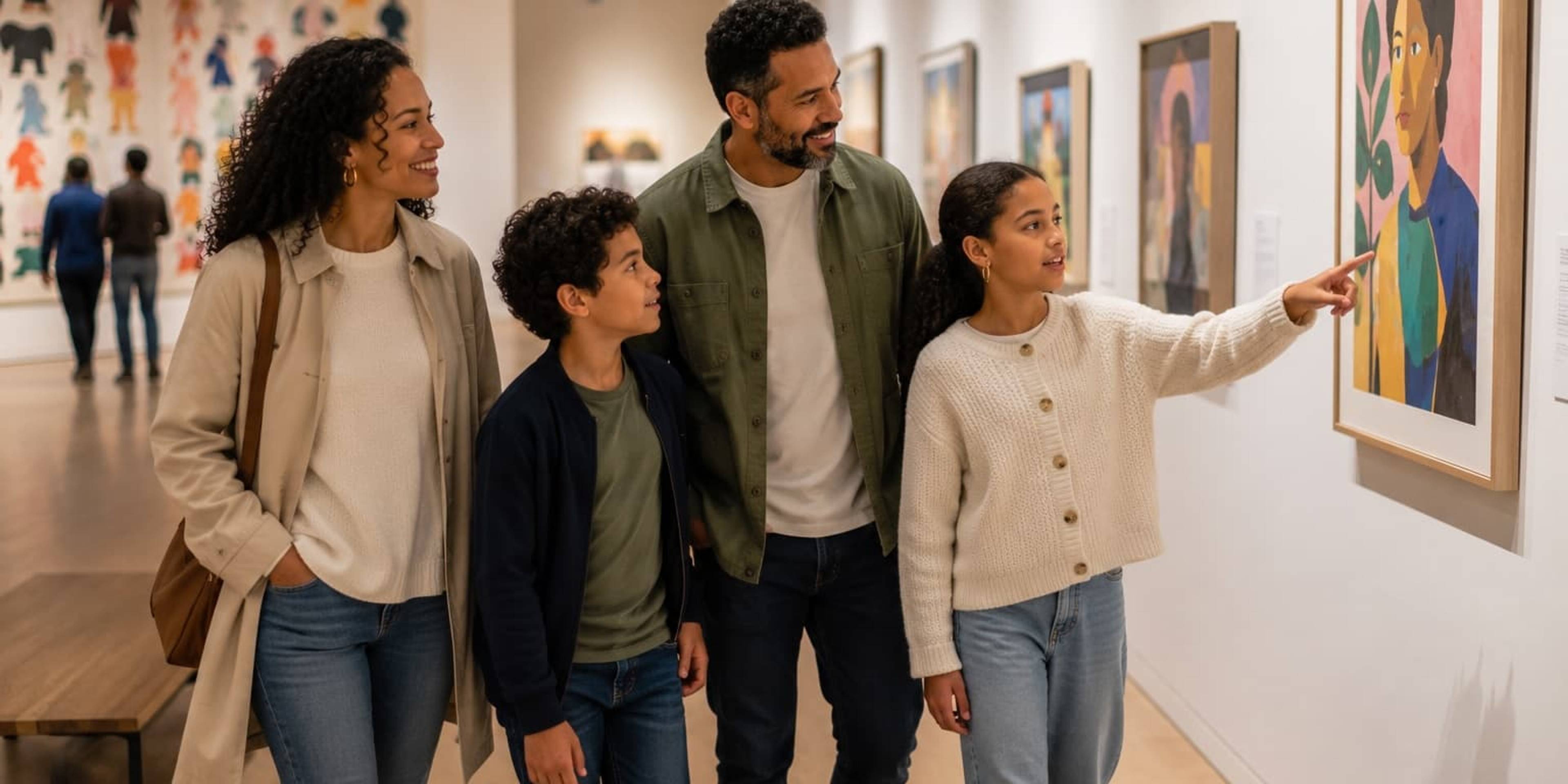
Of course, cultural enrichment doesn't have to involve a passport or a language textbook. We are very fortunate in the UK to have a rich cultural landscape right on our doorstep. According to the Museums Association, there are around 2,500 museums across the UK, and all national museums offer free entry to their permanent collections. Independent listings suggest there are more than 540 museums across the country that are completely free to visit, making cultural exploration far more accessible than many of us realise. A rainy summer afternoon spent wandering around a museum can spark just as much curiosity as a trip abroad.
The UK Government figures show that around 18 million visits are made each year to national museums and galleries that once charged an entrance fee. Whether it's standing beneath the blue whale at the Natural History Museum, discovering ancient artefacts at the British Museum or exploring contemporary art at Tate Modern, spaces like these give children and teenagers the chance to encounter different histories, cultures and ways of seeing the world, often at no cost beyond the train fare.
Support
It’s not always easy to encourage children to learn something new, let alone keep at it during the summer months. But with informal learning environments, trips and local resources, they can benefit from picking up skills that will have a lasting impact. If language learning isn’t your child’s cup of tea, there are plenty of other types of courses to get involved with. The beauty of summer learning is that it often feels less like learning and more like exploration.
Of course, languages aren't for everyone, and that's perfectly fine. Cultural enrichment can take numerous forms. Some children are drawn to music, others to storytelling, fashion, art, photography, design or filmmaking. Sometimes discovering a passion is simply a matter of finding the right doorway into it.
The University of Arts London offers a wide range of short courses and summer programmes specifically designed for teenagers. Many courses are practical and hands-on, giving young people the opportunity to experiment creatively while experiencing a taste of university life in a supportive environment.
The University for the Creative Arts runs a week-long Creative Taster course for 12–15-year-olds, introducing young people to art and design through hands-on studio projects. Nottingham Trent University even offers a fascinating summer school exploring astronomy and archaeology, where students investigate how ancient civilisations understood the night sky.
For teenagers considering future study options, courses like these can be particularly valuable. They offer the chance to meet like-minded peers, build confidence and spend time immersed in an area they genuinely enjoy. Sometimes a short course is all it takes for a young person to think, "I didn't know this existed, but I love it". This type of summer experience can be the stepping stone into lifelong hobbies or even future careers. The visibility they get from attending such courses is priceless, and it can provide them with multiple avenues for learning, creativity and connection.
For teenagers who are naturally drawn to technology, there are a growing number of coding and STEM programmes. Oxford Scholastica offers residential and online summer courses in Computer Science, Coding and Artificial Intelligence for teenagers interested in building websites, exploring AI and experiencing university life.
And for children who simply love stories, there are opportunities there too. Creative writing summer schools, such as those run by Lite Regal Education, immerse young people in workshops, poetry and literary experiences while encouraging them to develop their own voice as young writers. Sometimes all it takes is one unexpected course or museum visit to ignite a passion that can last a lifetime.
Ultimately, cultural enrichment doesn't need to look the same for every child. Whether it's learning a few phrases in another language before travelling abroad, attending a creative summer course, visiting a museum, trying a new cuisine or simply seeing things from a different perspective, these experiences can help young people create meaningful connections with the world around them. And occasionally, those seemingly small moments become the beginnings of something much bigger.
We can't finish without a quick reference to the weather! For those of us in the UK and much of Europe, it is very, very hot - uncomfortably so. Whilst formulating summer plans (or trying to go about the daily business of work and school life), staying cool and hydrated is proving a challenge. If you want some top tips, this article from the British Red Cross offers some gems, including cooling showers before bed and wearing refrigerated socks overnight! Maybe it's worth a try?
Note for our worldwide audience: We appreciate that it's not summer everywhere. For those of you heading into cooler months, where children aren't about to start their long summer break, you can find plenty of simple connection-fostering ideas within the Tooled Up platform, which you can use any time.
Are you a Tooled Up member?
Within Tooled Up, we have a wide range of resources to help children and young people make the most of their summer.
For parents:
2026 Summer Activities for Children and Teens
Our Favourite Resources for the Summer Ahead
Summer Holiday Packing Checklist for Teens
Ideas for Summer Holiday Learning
School staff might like to use:
Making the Most of the Summer Ahead: Assembly for Teen Boys