Reflect
Late November always feels like a time for an audit. As the year draws to a close, I find myself taking stock: how is everyone really doing, and what do we each want from the holidays ahead? In our house, the kitchen table has become mission control, with personal statement drafts at one end, A level coursework at the other and a box of tangled fairy lights in the middle. And, like many other parents I suspect, we have been fielding another question: can I have Grand Theft Auto VI for Christmas?
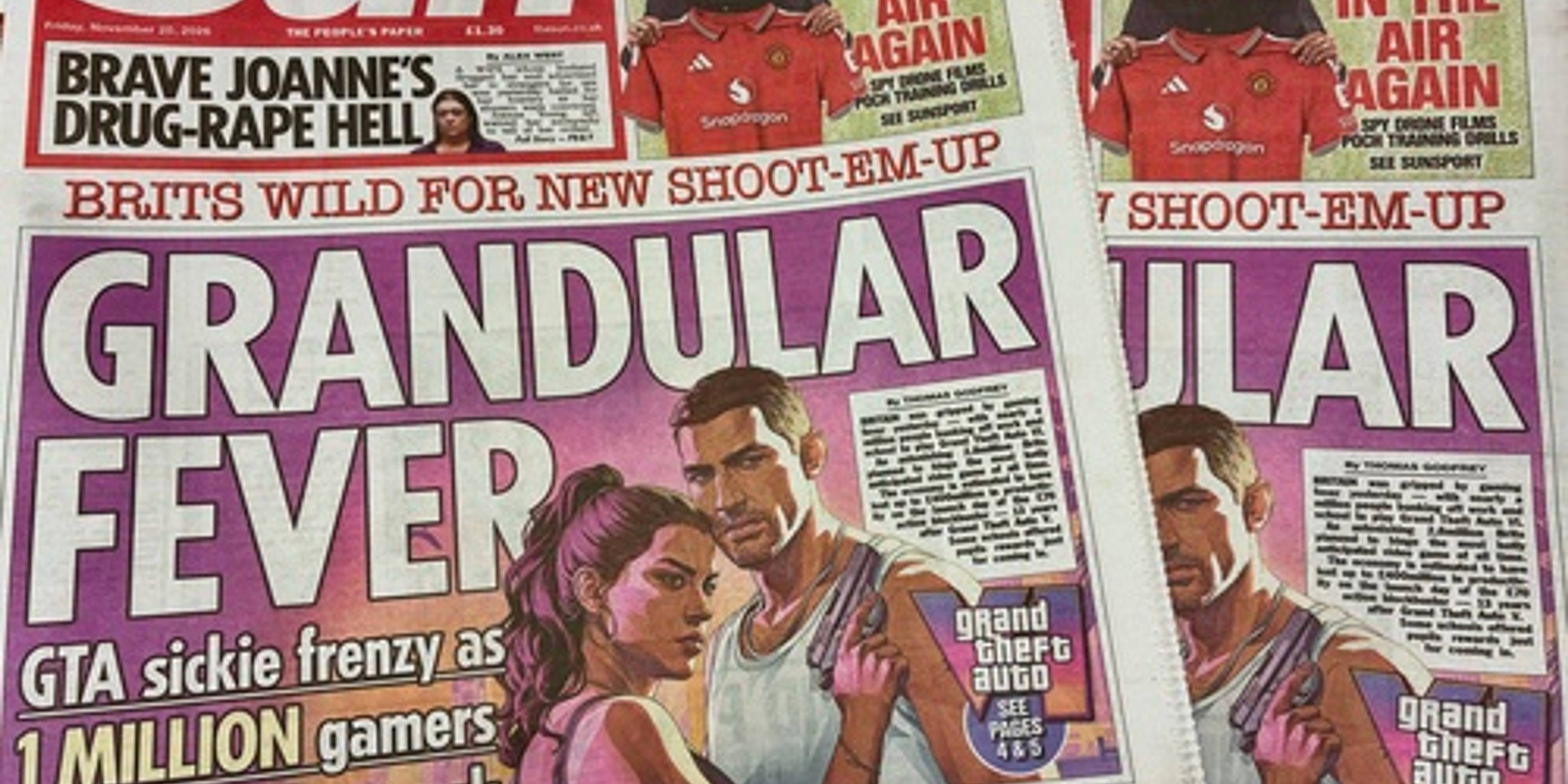
GTA VI finally launched on 19th November, and parents have been asking our team at Tooled Up plenty of questions about it. Is it OK to let my primary-age child play, or even watch, a game rated 18? What is it teaching our children? Will it make boys more violent? Could it deepen problems we already see in society? And how do I stop younger siblings overhearing it being played by my hubby in the living room? Fair questions.
Knowing I would be asked about GTA and real-world violence, I emailed my colleague, the criminologist Professor James Densley. His answer was reassuring. “Games explain almost none of the variance in serious violence,” he emailed. “There is a small, contested link to minor aggression, but no good evidence of a link to serious violence, partly because playing violent games is near-universal among young men, so studies can’t tell perpetrators apart from everyone else”. Closer to home, a study of more than 1,000 British 14 and 15-year-olds by Andrew Przybylski and Netta Weinstein found no link between violent gameplay and teenagers’ aggressive behaviour either.
That said, there is some effect. A meta-analysis of longitudinal studies by Anna Prescott and colleagues found that violent gameplay by adolescents was associated with increases in physical aggression over time. But, as James explains, “the effect is tiny. And the effect that most studies measure is behaviour such as yelling or pushing, not assault or homicide, so it’s difficult to extend to more violent outcomes”.
The crime data reveals something else very interesting. When Marinus Beerthuizen and colleagues looked at offences by young men in the Netherlands after the release of GTA V in 2013, they found fewer offences being committed, not more. Another study estimated that one million additional sales of intensely violent games reduced assaults by about 2%. The likely reason? Young men were at home playing, rather than out in the streets.
So will GTA VI turn a kind, well-connected teen into a violent one? Very unlikely. But that doesn’t mean we shouldn’t care about its content or about the impact of playing it on sleep and school attendance. Ahead of the launch, Tes reported that many UK schools had written to parents warning that absence for gaming would be recorded as unauthorised. It seems they were right to worry as it is estimated that around 35,000 more pupils were absent on release day.
I think this is concerning. Even one missed day adds up over a school year, and when parents allow gaming to take priority over learning, it undermines everything schools are trying to do.
For sixth formers in particular, this time of year also brings a dazzling array of administrative deadlines if applying to uni, mock exams looming and that driving test to get out of the way. The pressure is firmly on. With so much on their plates, it is completely understandable that teenagers need to let off steam, and for many, gaming is how they do it. But they already spend a huge amount of their learning time on screens, so perhaps encourage them to get moving before they pick up a controller. Balance really is everything.
Amid the A level admin, we have put up our Christmas tree. Untangling the lights, arguing good-naturedly about where the tinsel should go and deciding which bauble earns pride of place at the front has become an annual ritual that quietly reminds us of the passing of time.
This time next year, my seventeen-year-old will be living away from home, so evenings like these are numbered. Amid the deadlines, the debates about GTA and the endless pull of screens, I am reminding myself that making life a little more colourful, and a lot more fun matters too. Tomorrow, millions of American families will sit down for Thanksgiving and think about what they are grateful for. Before the festive rush takes hold, we could easily do the same.
Motivate
Back to GTA VI. Knowledge is power. The more we know about it, the better placed we are to respond calmly when the pestering starts. The next section is mainly aimed at parents of children under 16 who are telling you everyone has it and they will be left out if they don’t get it.
It is always a good idea to make an informed decision as a family about any game, rather than going along with what ‘everyone else’ is allowed. One way of doing one’s research is listening to other parents’ experience of it. Keza MacDonald, the Guardian’s games editor and a mum of two young boys, has played more than 70 hours of it, and her headline last week said it all: please don’t buy this game for your child. She reports finding the game brilliant and often hilarious. But she has “never played a game that has more thoroughly earned its 18 rating”, and her rule of thumb is a useful one: “If you think your child is too young to watch Breaking Bad, they are definitely too young for Grand Theft Auto VI".
If you desire more granular information about what the game contains and prefer a more formal review, check out what Common Sense Media says. Its review of GTA VI says violence, sex and bad language is used ‘a lot’ within the game and violence is constant and bloody. Players can shoot, beat and run over police and bystanders… and bodies can be dismembered. The lead characters have sex, sometimes graphically, strip-club dances include touching, there is full-frontal nudity and players can carry and take cocaine whenever they like. Strong swearing is constant and racist insults appear too.
One of the reasons I don’t recommend letting younger children play any 18-rated game, is that such permission opens the flood gates: “You let me play GTA, so why not watch these 18 rated films?”; a hard argument to win.
If you have committed to buying it, commit to play alongside them, so that you know what they are engaging with. Set strict time limits, make sure schoolwork comes first and don’t let the game take over; with a main story of around 80 hours, stopping at the end of a mission works better than a timer.
Even if GTA VI never enters your home, primary-aged children may well come across it, whether through clips on YouTube or TikTok, chatter in the playground or an older sibling or cousin playing over the holidays. If they do, stay calm; a big reaction can make them less likely to tell you next time. Start by finding out what they saw: “What did you see? How did it make you feel?” Then offer a simple, honest explanation: “That game is made for grown-ups. It has things in it that can be confusing or scary for children, which is why it has an 18+ rating”. Reassure them that they are not in trouble: “Thank you for telling me. You can always talk to me about anything you see online”. And give them words they can use themselves: “I’m not allowed to watch that. Can we play something else?”
With older siblings and cousins, a quiet word in advance goes a long way. Explain why it matters: “Your little brother looks up to you, so please play GTA when he’s in bed or wear headphones”. If you are visiting family over the holidays, it is fine to ask the host, kindly, whether the game can stay off while the younger ones are around: “We’re keeping things age-appropriate for the little ones. Would you mind if we saved GTA for later?” Most families will be glad you asked. Either way, keep consoles and phones out of bedrooms overnight.
If your child’s school sends a letter home about the game, use it as a springboard for conversation about the game, peer pressure and why adults’ decisions about digital diets deserve respect. When the inevitable “But everyone else is allowed!” comes, try: “I know it feels unfair, but our family rules are about what’s right for you, not what other families decide”. With the facts, our values and the school behind us, we can hold the line, calmly and kindly.
Support
Holding fire is a parenting skill worth practising all year round. Decades of research link the best outcomes for children with authoritative parenting, which is warm and loving but sets clear boundaries and high expectations. That means saying ‘no’, or ‘not this year’, and sometimes saying it regularly.
You might have just told your six-year-old that he isn’t getting any more chocolate biscuits; I have just told my seventeen-year-old that I am not funding his trip to Ayia Napa next summer. Sometimes, ‘no’ is a complete sentence.
But a ‘no’ lands far more gently when it sits alongside a few ‘yeses’. Saying no to GTA doesn’t mean saying no to fun. It might mean yes to a new board game, cinema trip, a family film night with popcorn, ice skating, a winter walk that ends with hot chocolate, or a few hours on an activity you have chosen together. My son may not be heading to Ayia Napa, but I have said yes to helping him plan a party closer to home. When children can see what we are saying yes to, our boundaries feel less like punishment and more like care.
As we move into the holiday season, my last question is, how are you doing and feeling? How will you have fun? What experience do you wish to have with your loved ones? A little bit of planning for fun and having things to look forward to can provide a sense of hope, renewed wellbeing and excitement that we all absolutely deserve.
Are you a Tooled Up member?
If your child is a keen gamer, you might be interested in some of these resources:
Andy Robertson: The Benefits of Gaming
Monetisation in Games: What Parents Need to Know
And for all parents: