Reflect
Many children live with serious allergies, and for them and their families, even an ordinary school day can involve additional planning, precautions and worries. With new statutory allergy safety requirements now in place for schools in England, what does it really mean to ensure that these children feel safe, supported and included?
The first two sections of this week's Wednesday Wisdom have been written by Hannah Stupple, a Children's Allergy Nurse Specialist, currently working at the Allergy Centre of Excellence in London. A former Lead Nurse at the British Society for Allergy and Clinical Immunology (BSACI), Hannah has extensive experience in allergy education and training. To begin, she asks us to step into the shoes of a seven-year-old child...
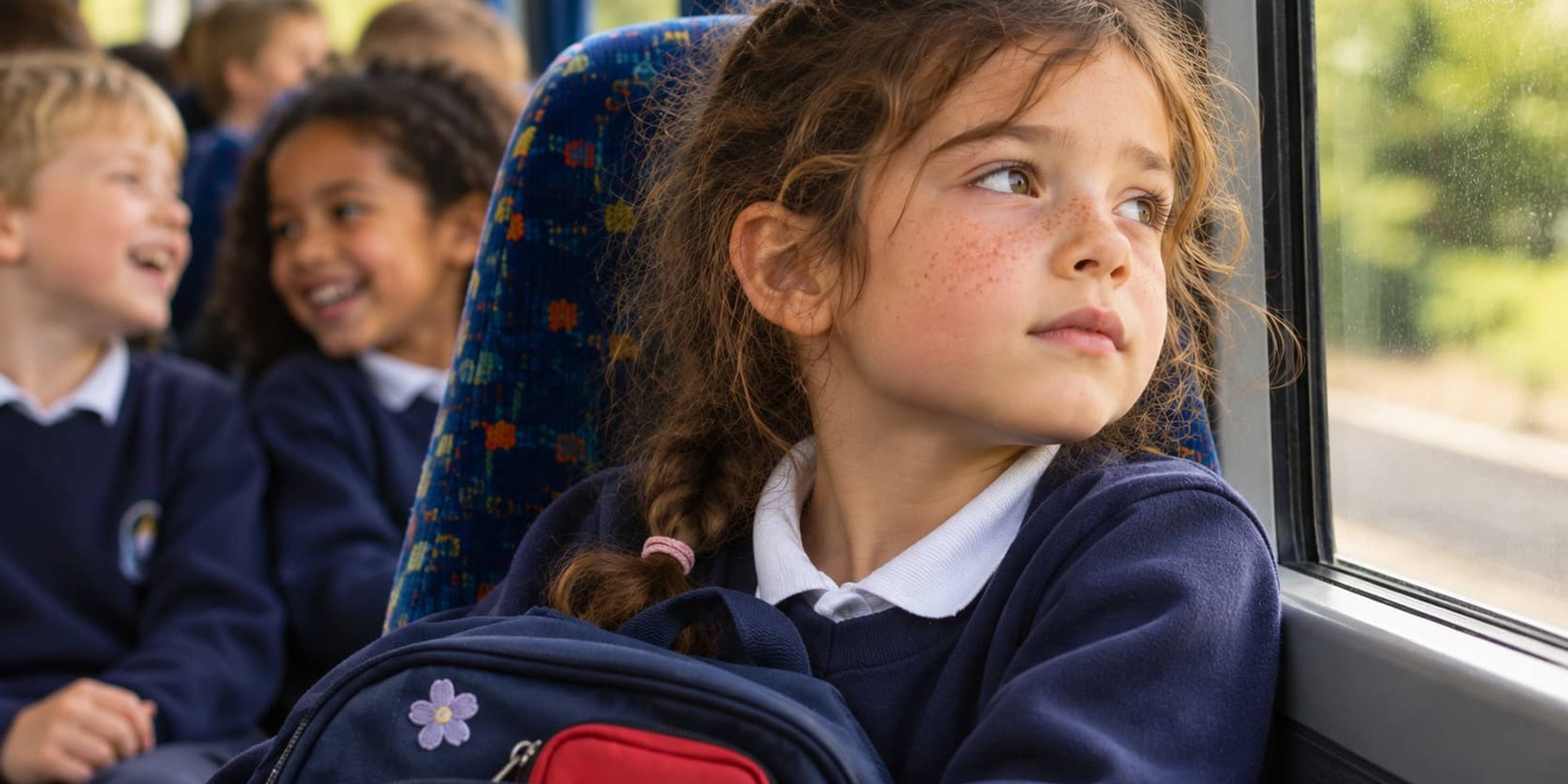
You are seven years old and the day begins long before you reach the school gates. Moisturiser is applied to your itchy eczema before you get dressed, you take two puffs of your inhaler before you clean your teeth. Downstairs for breakfast and it’s a new box of your usual cereal. Just as you go to pour it, your mum reads the label to check the ingredients haven’t changed since the last box.
Your dad pops your emergency medicine pack in his bag for the walk to school. It’s a big day today, you’re off on a school trip. When you arrive, there’s a buzz of excitement. The coach is there and you run to greet your classmates. No one else is carrying a bag, but you are. You need to bring your own lunch, as the place you’re going to couldn’t guarantee a safe meal because of your wheat and egg allergy. That’s okay, mum always makes you something special in your lunchbox when things like that happen.
Dad goes over to speak to the teacher as everyone starts getting on the coach. He’s double-checking whether the teacher has definitely got the school’s set of spare Epipens. Then someone falls over and the teacher is called away. Dad looks worried. He pops your emergency pack in your bag, and says, “Just in case, ey? If you need them, you know exactly where they are”. You had practiced how to use your Epipen last night before bed, because not all grown ups would know how to help, so it’s always best that you know how to use your medicines, just in case. He gives you a big cuddle, squeezing you longer than usual.
As you get on the coach, the boy next to you is eating a muffin. The crumbs fall onto your seat and you feel worried. The teachers are right at the front and the coach is loud. You wish you were back at home with mum and dad.
Motivate
I don’t think every school trip for every child with allergies starts like this, but it is based on the real experience of a patient I met in clinic recently. It would be easy to read this and wonder why the adults around this child haven't done more to make the experience less worrying. But it is important to recognise that schools are complex, busy environments and teachers have an enormous amount to think about.
On any given school day, a teacher may be managing the learning, wellbeing and behaviour of an entire class, supporting children with additional learning requirements, and navigating the many unexpected situations that arise throughout the day. A teacher may have a child in their class with epilepsy and another with diabetes, alongside the child with allergies. Each condition brings its own considerations, risks and emergency procedures. Teachers are expected to develop an understanding of a range of potentially life-threatening conditions. They aren't medical professionals, nor should we expect them to become experts overnight.
Most teachers want the very best for the children in their care, but they are juggling multiple responsibilities and cannot be expected to remember every detail, every time. This isn't about apportioning blame or adding another expectation to an already stretched teacher’s workload. Actually, it's about ensuring that good intentions are supported by the right knowledge, training, procedures and resources and recognising the importance of putting appropriate protections in place. This is where the significance of Benedict's Law comes into focus. Named in memory of five-year-old Benedict Blythe, who died following an allergic reaction at school, the campaign has helped bring about new statutory requirements in England aimed at improving allergy safety through clearer policies, staff training and emergency preparedness.
Allergies are far from uncommon in our schools. Allergy UK estimates that around 40% of children have been diagnosed with an allergic condition. Food allergy affects approximately 2–4% of children, depending on age. These are not isolated needs affecting a handful of pupils; they are conditions that schools are increasingly required to understand and accommodate.
The Benedict Blythe Foundation drew on the tragic deaths of three children in 2017 - Karanbir Cheema, Nasar Ahmed and Mohammed Ismaeel Ashraf - and the subsequent coroners' reports to help inform its recommendations for improving allergy safety in schools. A recurring and particularly important learning was the need for prompt recognition of anaphylaxis and immediate administration of adrenaline. The report also highlights inconsistencies in staff training, allergy action plans and access to in-date emergency medication.
Using the Swiss cheese model of risk, ensuring that everyone involved in a child's care, from lunchtime supervisors and caretakers to after-school staff, receives regular, high-quality training helps close gaps in protection. Staff need to understand what an allergic reaction looks, feels and sounds like, and know when and how to administer emergency medication. With knowledge comes confidence, helping to remove the hesitation that can delay treatment. Adrenaline is a safe and essential first-line treatment for anaphylaxis. It should never be viewed as a last resort or delayed until a child is critically unwell; it should be administered promptly at the first signs of anaphylaxis, in accordance with their emergency plan.
Of course, anaphylaxis at school is relatively uncommon, but the way children with allergies are supported every day can have a significant impact on their psychological wellbeing. Keeping children safe should never come at the expense of their inclusion. Conversations with friends working in education have highlighted how, sometimes, uncertainty and fear around allergy management can lead to children being asked to eat separately from their friends, even where this may not be necessary. Many parents of children with allergies will recognise the constant balancing act between safety and inclusion. Without the right knowledge and understanding of what is genuinely needed to keep a child safe, the balance can tip too far towards restriction, leaving children feeling isolated and different.
This is another important aspect of Benedict's Law: establishing clearer expectations not only around safety and emergency preparedness, but also around inclusion and what good allergy management should look like in everyday school life. A child should be able to sit with their friends at lunchtime, take part in activities and enjoy school without their allergy becoming a barrier to belonging.
Coming back to my Swiss cheese analogy, there is little point in ensuring everyone is trained to recognise and respond to anaphylaxis if the emergency medication isn't readily available. This is where spare adrenaline auto-injectors in schools become so important. And this isn't just a theoretical safety net mentioned in the new guidance; there is real-world evidence of their potentially life-saving impact. A project in secondary schools across Leicestershire recorded four uses of spare pens in its first two years, with two incidents involving children and staff who did not have access to their own medication, where the spare devices were considered life-saving.
Ultimately, none of this is about expecting schools to eliminate every risk or asking teachers to carry yet another responsibility without the support to manage it. It's about creating an environment where the right knowledge, training, medication and procedures are in place, so that everyone feels confident in their role and children can enjoy school without unnecessary restrictions or anxiety.
Parents should feel able to trust that their child is safe, teachers should feel equipped and supported to manage the needs of the children in their care, and children themselves should feel understood rather than different.
Perhaps we should return to that seven-year-old getting onto the school coach. They shouldn't have to spend the journey worrying about crumbs on their seat, or whether their teacher knows what to do if they become unwell. They should be thinking about the excitement of the day ahead, laughing with their friends and making memories. Benedict's Law is an important step towards making this a reality, but legislation alone cannot create a culture of understanding and inclusion. That takes all of us. Because ultimately, having an allergy should never mean having to miss out on childhood. Every child deserves to feel safe, included and understood.
Support
One thing that struck me when reading Hannah's insights was how much the experience of living with allergies depends on other people. Schools have an important responsibility to keep children safe, of course, but what about the rest of us? As parents, friends, relatives and members of school communities, there is a great deal we can do to make life a little easier for families managing serious allergies.
Back in 2023, we published a Wednesday Wisdom called Elevating Empathy, following a conversation with Professor Adam Fox, one of the UK’s leading paediatric allergy specialists, and Sarah Knight from The Allergy Team. One of the things that stayed with us was how often parents of children with allergies find themselves having to explain, check, remind and sometimes even apologise for their child's needs. They might need to ask about the ingredients in a birthday cake, check what food will be served at a party or explain why their child can't share someone else's snack. These requests might sometimes seem inconvenient to other parents, but when we consider what is at stake, it becomes much easier to understand why they matter.
I would imagine that there is a huge emotional effort involved in these everyday interactions. If, like me, your children don’t have life-threatening allergies, imagine having to ask another parent for reassurance that the food at a party will be safe, perhaps whilst worrying that they might think you are being difficult. Or knowing that your child desperately wants to join in with their friends, but feeling uncertain about whether the adults supervising an activity understand their needs.
Allergy UK has some excellent advice on how we can all become better 'allergy allies'. At its heart, it is very simple: listen, ask questions and take other people's concerns seriously by showing that we care. If we're hosting a birthday party or inviting a child over for tea, we can ask about allergies in advance and avoid making assumptions about what is safe. Allergy UK also recommends keeping the packaging from any food we prepare, so that families can check ingredients for themselves. And if we're unsure about something, it's much better to say so than to offer reassurance that we can't confidently give.
It's also worth thinking about the messages our own children pick up from us. If a school changes its lunch arrangements, asks families not to bring certain foods to an event or makes adjustments so that a child with allergies can participate, how do we respond? Do we talk about the inconvenience, or do we help our children understand why these measures might be important? Our reactions can influence whether children see a classmate's allergy as an irritation or simply one of the many differences that we can learn to accommodate.
We can also encourage children to think about inclusion in quite ordinary ways. If a friend can't eat the birthday cake, what might help them feel part of the celebration? If someone needs to bring their own food on a school trip, how can we make sure they don't feel singled out? A little curiosity and consideration can be enough to help children see things from another perspective. There are some lovely resources available to help children develop this understanding, too. The Allergy Ally Project (a US-based scheme) offers free games, quizzes and activities for children of different ages, designed to encourage greater awareness of food allergies and help young people think about how they can support their friends.
Of course, children with allergies are individuals. Some will be confident explaining their needs, while others may feel embarrassed or reluctant to draw attention to themselves. We shouldn't assume that every child wants to talk about their allergy, or make it the defining feature of who they are.
Keeping a child safe often takes a lot more work than we are aware of. What we can do is listen, take concerns seriously and be ready to adapt.
Are you a Tooled Up member?
Resources for educators
School Allergy Guidance: A Practical Guide for Allergy Leads by Hannah Kramer
Allergy Management - New 2026 Guidance for UK Schools (Staff CPD)
Resources for parents
Books to Support Children with Allergies
Hay Fever and Exam Season: How Allergy Immunotherapy Could Help
Ask Professor Adam Fox Anything About Allergies
Find all of our resources on allergies here.