Reflect
I appreciate that hearing about other people’s holidays isn’t always welcome, but I have recently returned from a trip to the United States that has left a lasting impression. My children have an American grandmother and had only ever seen the America in movies, on the news and on social media. What would the reality be like?
I was thinking this might be the one and only trip to America for many years, so we visited New Orleans, Nashville and Miami; places whose sights, sounds and histories certainly linger long after the jet lag fades.
Once home, I began to reflect on what this trip had altered in us what we had been influenced by. My youngest was struck by the sight of people exercising every morning on South Beach and announced his intention to run daily “from now on”. My older son, meanwhile, was fascinated by the unapologetic soundtrack of Miami life: music booming out from the back of bikes, something socially unacceptable in the UK. For me, South Beach rekindled a long-standing love of Art Deco and reminded me how colour, particularly the pastel palette synonymous with the area, can influence mood and perspective.
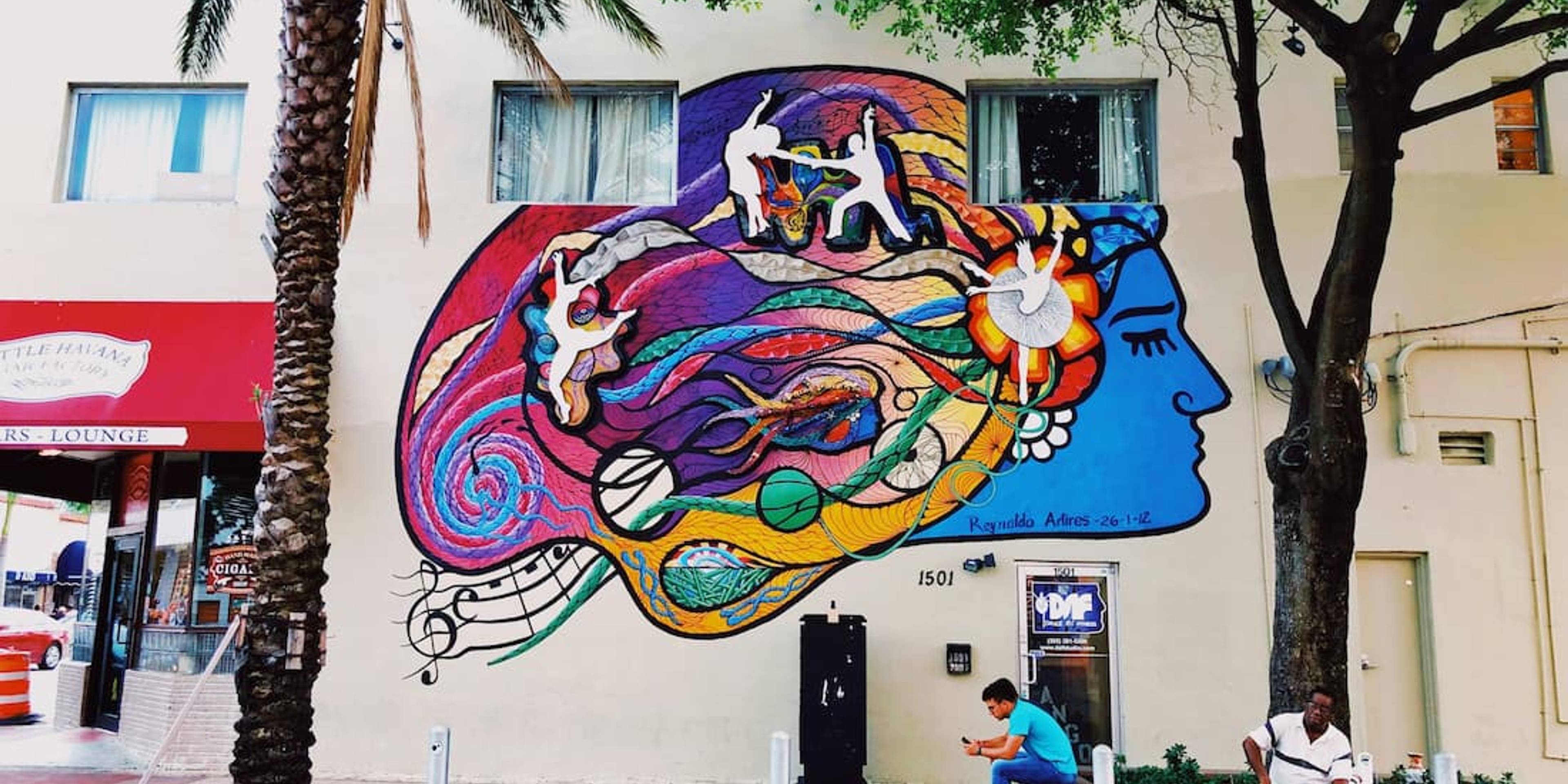
On visits to Little Havana, learning about Cuban culture was the bit of the trip that really made me think about the essence of ‘community’; respect for elders here was the norm, everyone knew everyone else and music flowed in the daytime cafes owned by families. Street art celebrated local citizens, Cuban musicians and veterans. People seemed to genuinely care for and look after one another.
Nashville offered a very different education. Here, we encountered the storytelling traditions of country music and noticed the threads of patriotism and religiosity woven through many of the songs. We were equally struck by the cultural importance of cowboy hats and boots.
In New Orleans, immersion in jazz introduced us to the deeper interplay between music, history, politics, food and culture. My teens learned how immigration richly influenced the delicious foods we ate; got the difference between Creole and Cajun spices and understood why certain street names were in Spanish or houses built in the French style.
On our trip, my teens started to make connections between things they had once learned about in school in ‘real life’. A visit to the Oak Valley Plantation outside New Orleans gave them a tangible understanding of the lives of enslaved people and I think they were genuinely shocked by the stark contrast between the material conditions of enslaved inhabitants of this rich piece of land and the plantation owners. I was mesmerised by the plantation mistress’s shopping records that you could read: lavish spending on French lace and tuition for her daughter alongside the ‘purchase’ of a woman (same age as I am now) for $200. As a group, we talked about modern-day slavery in the UK, recognising how exploitation persists, albeit in different forms.
For one friend, seeing the cramped living quarters of enslaved people prompted reflection on her father’s upbringing in rural Ireland. He had grown up in a two-room cottage shared by eighteen children, including three sets of twins. She recalled stories of some children being sent to wealthier neighbours, only to beg to return home, to poverty, overcrowding, and yet a sense of safety and belonging. These comparisons sparked collective reflection on resilience, family, and what it truly means to feel secure.
Every interaction abroad triggered different memories and emotions for each of us. In doing so, the trip encouraged us to reflect more deeply on our own histories, privileges, and the resilience embedded within our own family stories.
In New Orleans, there were raw reminders of contemporary political tensions, the kind of overreach they had seen on social media; tanks, armed soldiers and barricaded streets seemed like a ‘new normal’ here during large events. At the same time, my youngest was able to articulate that what you see on social media doesn’t tell you the whole story about a place. “You never hear about other stuff” he said, “Like how friendly people are”.
I think my teens were able to return to to the UK better equipped to interrogate the snapshots of American life they encounter on social media and with a more nuanced understanding.
Motivate
While we were abroad, news arrived via social media that one of my boys’ favourite boxing stars had been in a car accident, one that had killed two of his friends. As this event unfolded in real time, it was accompanied by a rapid onslaught of conspiracy theories and raw videos filmed at the scene. I could see, very clearly, how teenagers respond to and consume social media.
In the immediate aftermath of Anthony Joshua’s dreadful accident, several unfounded conspiracy theories circulated online, driven entirely by speculation rather than evidence. Some users promoted a so-called “curse” narrative linking the crash to Joshua’s recent fight with Jake Paul. Others went further, suggesting without basis that Paul or his associates had orchestrated the accident out of spite. More extreme fringe claims alleged that the crash was a targeted attack misrepresented as a road accident, while a smaller subset invoked occult or mystical explanations. All of these theories were contradicted by official reporting, which consistently described the incident as a tragic traffic accident with no indication of foul play.
What struck me was the appeal and pull of conspiracy for the teenage brain. It can feel intensely exciting to engage with conspiracy theories; such collective scepticism aligns neatly with adolescents’ appetite for novelty and their tendency to challenge norms. These theories can also feel intuitively compelling, particularly when there is a fear of being “duped” by official accounts.
For parents and educators, moments like this offer an opportunity to help young people develop critical media literacy, arguably one of the most important skills of this century. Research by cognitive neuroscientists, psychologists and philosophers can guide us in how to approach these conversations in ways that are more likely to succeed.
What feels intuitive for adults may not work. My instinct was to say, “Don’t be ridiculous. The accident has only just happened. How can you possibly draw conclusions?” Instead, I said: “After an event like this, there is a lot of information around, isn’t there? It can be really hard to work out what is going on. Maybe it is best to wait and see.”
I said this because of the research of Dr Leor Zmigrod, whose work we have highlighted on our Tooled Up platform. Dr Zmigrod highlights how “vacuum spots” can emerge after major events that are widely reported online. Missing information is quickly filled with alternative explanations. I encouraged my son to wait and praised him for allowing the news to settle rather than drawing conclusions. I was trying to model, in real time, how to respond. “Let’s avoid too much social media for a few days and let’s wait until we have more information from reputable sources.”
This raises a key question: what the heck, in 2026, constitutes a reputable source of information? Each of us will have a different view. Useful questions for families to mull over during such discussions might include: how do we know the material we are watching is balanced? Who has authored it? Have they cited their sources? Where is the evidence?
As parents, we can help children and young people learn to “wait and see” when news breaks, calmly separating confirmed reporting from speculation, encouraging them to check sources, and helping them understand that influencers are often competing for attention, sometimes even profiting from the ideas they promote. Young people in particular don’t like to feel exploited, so algorithmic literacy and an understanding of how social media platforms operate can be powerful antidotes to social media fast consumption.
In schools, teachers are often on the frontline of conversations about global events; asked about what happened over the weekend, their views on politics, politicians and quizzed on all kinds of conspiracies – whilst attempting to maintain political neutrality and ensuring students are not misinformed. Researchers such as Professor Jeremy Hayward at UCL are among many academics currently developing initiatives to equip educators with strategies to address misinformation and conspiracy theories, that are designed to promote students’ critical thinking and digital literacy.
I recorded a session with Professor Hayward last week in advance of the Tooled Up online conference for educators on Complex Challenges in Schools, taking place on 6th February. What struck me was that there is almost an art to managing classroom discussion on contested issues, but that it can be learned and practised. Philosophers like Professor Hayward equip educators with particular methodologies that emphasise openness to students’ ideas without inadvertently promoting content that is harmful, untrue or problematic. He highlights certain intellectual virtues that we can nurture in the classroom; openness to other’s ideas, perseverance, humility, an appetite for evaluation of different viewpoints and insights into the lives of other persons, for example.
As parents, we can align with these efforts within our homes by modelling, valuing and celebrating intellectual curiosity, whilst also being comfortable with not knowing everything, and changing our mind or stance based on an evaluation of evidence.
A more urgent action might be to explore who are young people are currently influenced by. Who are they connecting with online? Who are they listening to when they have their ear pods in their ears? Who do they look up to in the online world and why? If you genuinely don’t know, today is a good day to ask. Simple starting questions might include: who do you enjoy listening to online? What is it about their content that appeals to you? How can I be sure you are accessing balanced information?
If you are concerned by any aspect of what you hear, it is important to call them ‘in’ rather than call them out. Demonstrate genuine interest in their perspectives, while thoughtfully and respectfully challenging assumptions or claims where appropriate. The goal is to introduce cognitive flexibility, not to win an argument or shut conversations down, but to keep dialogue open. When approached in this way, discussions can become safe, constructive, and intellectually enriching spaces where young people learn to reflect, question, and refine their thinking.
Support
January has arrived and, with it, a steady stream of questions from subscribers reaching our team at Tooled Up. Many enquiries are sadly prompted by experiences of loss. It is a time of year when grief may feel heavier, family conflicts may have surfaced over the holidays, and people begin to reflect on what makes them happy and what they might need.
The start of the year tends to sharpen questions about loss, direction and meaning, but it also offers an invitation: to be kinder to ourselves, to notice what has sustained us, and to model the reflective habits we hope to instil in our children and young people.
As the months ahead unfold, as a team at Tooled Up, we hope our resources, conversations and shared thinking continue to support you, because in navigating complexity, uncertainty and change, none of us is parenting or teaching alone. As author and researcher Brené Brown reminds us, “We don’t have to do all of it alone. We were never meant to.” At Tooled Up, that belief sits at the heart of our work.
Are you a Tooled Up member?
If you'd like to browse our resources on cultivating children and young people's critical thinking skills, why not start with the resources listed below.
For parents:
What We Need to Know About Extremist Thinking in Young People with Dr Leor Zmigrod
Talking to Children about Traumatic Events in the World: 10 Things to Remember
Making Sense of the World: Webinar with Dr Dennis Ougrin and Anna Tarasenko
Talking with Children and Young People about Social Media
You might also want to re-read an edition of Wednesday Wisdom on Social Shocks. It references a lovely book which can help younger children to process traumatic news or world events.
For school staff: