Reflect
Over the past few months, a team at the University of Warwick has been investigating the latest evidence on digital technologies, artificial intelligence and gambling harms among children and young people. This week’s Wednesday Wisdom is written by Dr Nomisha Kurian, who is leading the research.
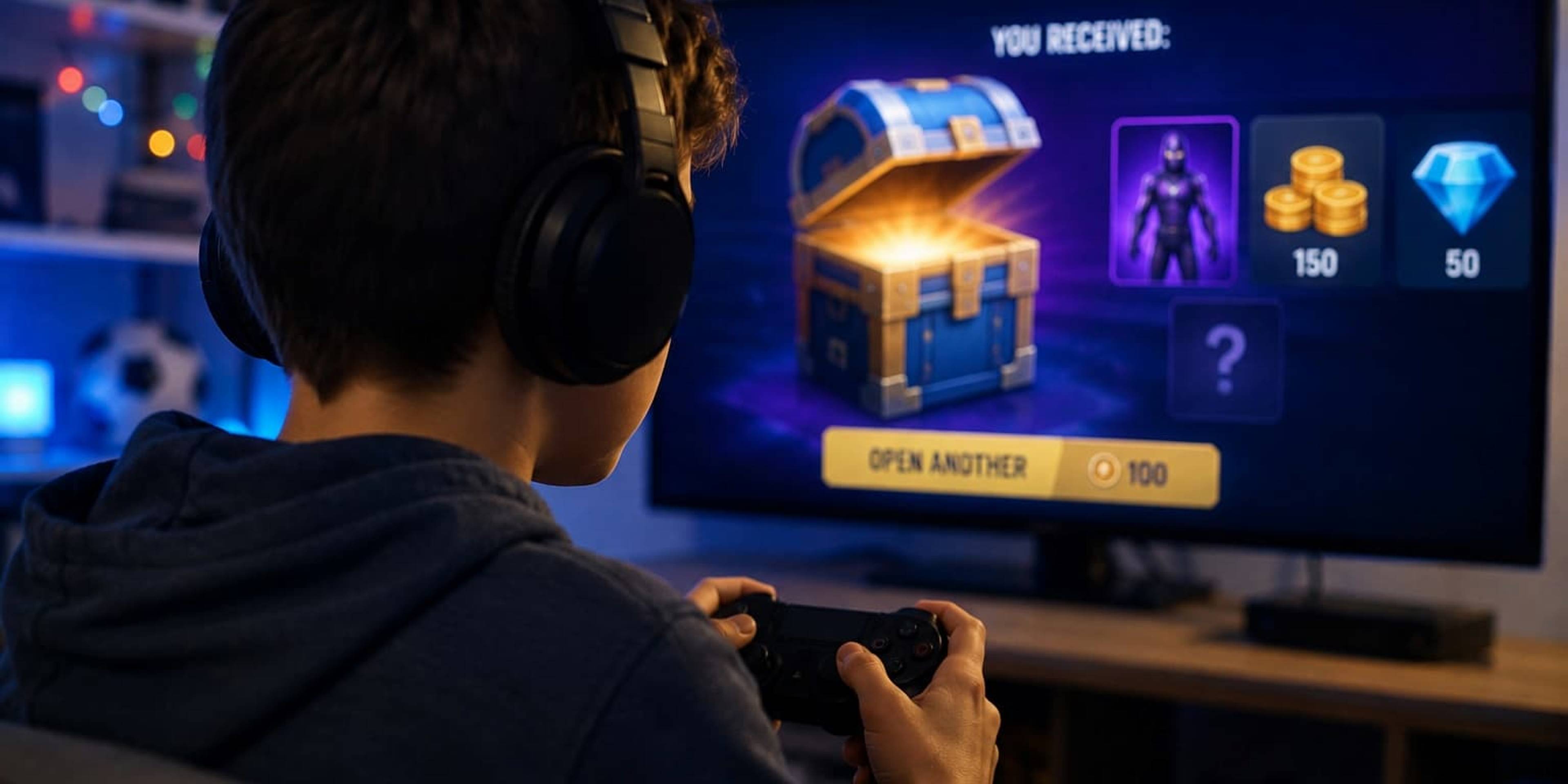
Imagine a child opening a game after school. Maybe they are on the sofa, in the kitchen, on the bus or upstairs in their bedroom. The game looks bright, funny, a welcome break from the tedium of homework. There are characters to unlock, levels to complete, coins to collect, boxes to open, “skins” to win. And little flashes of celebration when something exciting happens. To many adults, this may look like ordinary play. And for the children, this may feel like ordinary play too. That is what makes this issue so tricky.
We have found that the boundaries between gaming, gambling, advertising, social media and online entertainment are more and more blurred. Many children may encounter gambling-like features long before they are old enough to gamble legally, often with harmful consequences for their mental health, academic progress and spending behaviour.
A child may open a loot box. Or play a game with random rewards. They may see a betting advert during a football match, or watch an influencer promote a gambling brand. These might be fleeting, one-off moments. But over time, if it becomes a pattern, some children can fall into real-life gambling when they get older, or form harmful perceptions of gambling-like activity being normal from a young age.
If we adults panic, we won’t help anyone, and we don’t want children caught up in unsafe spending to feel judged or misunderstood (this can make them feel compelled to keep secrets). So perhaps a more useful question is: what are children learning, almost without noticing?
They may learn that spending money can bring a surprise reward. Or that chance-based wins feel thrilling. They may learn that “almost winning” means they should try again. Gambling might be presented as funny, social, glamorous, clever, sporty or harmless. They may absorb the idea that the risk is part of the fun.
One thing we found striking in our research is that gambling-like mechanisms appear very often inside the ordinary digital spaces children already use. These include video games, mobile apps, social media, esports, online advertising and games that use coins, skins, boxes, spins or randomised rewards. Some studies suggest that simulated gambling can act as a pathway into real-money gambling later on. Others show that children often remember gambling advertising, especially when it uses humour, celebrity, sport, friendship, bright colours or excitement.
That last point is especially important. We know children learn a lot from formal lessons, but sometimes they learn even more from the informal digital cues around them. They learn from what appears “normal”, what keeps popping up. The emotional tone of an activity makes an impression as well. When gambling is consistently presented as a fun, ubiquitous part of play, sport, gaming, entertainment and social life, it feels familiar. Familiar things can start to feel safe.
Motivate
We (educators and/or parents) don’t have to become gaming experts overnight. Actually, children will often know more than we do about the latest platforms, streamers, skins and trends. It can feel unsettling, but we could use our ignorance to start conversations and get curious!
Gentle questions, with a show of genuine interest, can help. “What happens when you open that box?” “Do you know what you might get before you spend?” “Can you win something rare?” “Does the game ever make you feel rushed?” “What happens if you don’t buy the upgrade?” “Have you ever felt annoyed after spending coins or money in a game?” Children are more likely to talk when they feel listened to.
It can also help to talk about design. Many children understand fairness. They might remember getting mad if they feel tricked, or the antsy feeling of wanting one more go. Try saying: “Games are designed to keep people playing. Some features are fun. Some features make spending feel exciting. Let’s see if we can spot how the game does that.”
With younger children, focus on simple ideas. Chance means you do not know what you will get. A reward is different from a purchase. Game money can still connect to real money. Bright colours, countdowns, noises and celebrations can make something feel more exciting than it really is.
With older children and teenagers, the conversation can go further. We can talk about advertising, influencers, sports betting, odds, peer pressure and the business model behind games. Older children are starting to develop their critical thinking and they might have plenty of interesting things to say if we ask what gambling companies gain from using celebrities, football clubs, streamers, humour or social media. We can also ask whether young people feel protected well enough - what are their own ideas about how to stay safe online?
Families can take practical steps. Keep payment settings locked down. Use spending limits where possible. Turn off one-click purchases. Check whether games include loot boxes, randomised rewards, in-game currencies, skins, betting-style features or social casino elements. Look at age ratings, while remembering that age ratings can miss important design features. Play alongside your child occasionally, even for ten minutes. One short gaming session can reveal a lot.
Schools have a role here as well. We found that many schools make no mention of gambling because it is seen as a ‘grown-up’ problem (relegated to casinos, lottery tickets and betting shops). Yet, games, apps, sport, social media, advertising and influencer culture are all part of the gambling and gambling-like ecosystems that surround children and teens and we desperately need curricula that cover these. Digital literacy lessons can help children examine persuasion, probability, money, risk, reward, data and design. PSHE can create space for conversations about pressure, impulsivity, sleep, mood, secrecy, shame and financial decision-making.
Of course, there are limits to how much children can be expected to understand. A child cannot be expected to outwit every persuasive design feature, advert, algorithm and commercial nudge. They need us to stay alert, and companies need to design more safely. Regulators, meanwhile, need to keep pace with changing digital environments.
Family conversations always have the power to make a difference, though, despite how much is out of our control. A child may say, “I spent money and I feel awful” or, “I keep thinking about that game” or, “I clicked something and now I’m worried”. Shared problem-solving and moments when adults lean in before something becomes a crisis, help a lot.
Support
To make this more concrete, here are some starting points for families and schools.
First, talk about gambling before children encounter it as a problem. A short conversation during a game, a football match, a YouTube advert, or a chat about pocket money can be enough. Children often learn best when the conversation connects to something real.
Second, help children develop a language for risk. Words such as chance, odds, spending, pressure, reward, advert, influence, design, habit and impulse give children tools to describe what they are experiencing. When children can name a feeling or mechanism, they can question it more easily.
Third, make asking for help feel normal. Some children may feel embarrassed after spending money, chasing a reward, hiding a purchase, or losing control of their gaming. A useful family message might be: “If something online worries you, even if you clicked it or spent money, you can tell us. We will help you sort it out”.
Fourth, build a bridge between home and school. Parents may notice when a child is tired, irritable, secretive about spending, anxious after gaming, or upset after being told to stop. Schools may notice when a child struggles to concentrate, talks often about betting or gaming rewards, falls out with friends over online play, or seems worried about money. Each setting sees a different part of the picture. Gentle home-school communication can make a real difference.
Finally, keep the wider picture in view. Children did not create these systems. They are growing up in digital environments where play, money, advertising, social status and chance can sit very close together. Many children may be just fine, but some will need our support.
We must help children recognise when play starts to borrow the emotional machinery of gambling: suspense, risk, reward, near-misses, pressure, spending and the frantic hope that the next click might be the lucky one. When children learn to spot those patterns, they gain a little more power and we can help them to avoid some of the tragic outcomes we observed in our research. As with most challenges in an ever-more digital world, our children still benefit from some old-fashioned things: steady adults, brave conversations, clear boundaries and a safe place to bring their mistakes.
If you’d like to find out more about helping children to navigate this issue, you are warmly invited to register for a webinar on 17th June where I will be presenting findings from this UK Research and Innovation Rapid Evidence Review on keeping children safe online. Tooled Up's Dr Kathy Weston will also be featuring.
Are you a Tooled Up member?
Anyone interested in learning more about gaming and gambling can browse through the following resources:
Monetisation in Games: What Parents Need to Know
The Truth about Gaming with Professor Pete Etchells
Teaching Young People About Gambling
Everything Parents Need to Know About Fortnite and Roblox
In the UK, as of September 2026, schools are expected to cover online financial harms including gambling-like content within gaming. Primary teachers might be interested in our lesson plan: