
Over the last year, calls to ban social media for under-16s in the UK have grown considerably louder.
As we speak, governments all over the world are considering sweeping restrictions, schools are shifting or tightening policies and parents are vocalising more concern. But what does the actual research say about such bans?
A fresh report from the University of Cambridge’s Digital Mental Health Group offers one of the most comprehensive, evidence-based reviews of this debate. Its conclusions are nuanced and might even surprise you.
The big picture: harm exists, but the solution isn’t clear
The report draws a critical distinction between two types of evidence: individual-level harm (clear and serious cases) and population-level effects (overall trends across many young people).
The report acknowledges that, yes, social media can cause real harm for some young people. Such harms can include exposure to distressing or harmful content, cyberbullying, sleep disruption, addictive patterns of use and, in extreme cases, can play a role in young people’s self-harming behaviours or suicide.
That said, across the whole population, these effects have been determined to be “small and uncertain”. When researchers ‘zoom out’, the picture becomes more complex. It is true to say that there is a correlation between social media use and poorer mental health, but the effect sizes are small and the available evidence is inconsistent and of low-quality.
Most available studies are correlational, meaning that we cannot be sure that social media per se causes poor mental health. It could be the reverse (struggling teens might simply be drawn to using social media more). Or, both could be influenced by other factors (family environment, levels of available social support to teens etc).
The key question: do bans actually help?
Here’s where the report delivers its most important and perhaps unexpected finding. There is no strong experimental evidence that banning social media improves mental health in adolescents.
Currently, we do not have any large, well-designed studies testing full bans in healthy under-18s and very limited research on reducing usage in general populations. This means that policymakers are currently operating with very little causal evidence. Even when researchers look at reducing social media (not banning it), the results are mixed.
In adolescents:
- A Danish study reduced usage by 1 hour/day and found no improvement in wellbeing.
- A Canadian study (with already vulnerable teens) found improved anxiety, depression and sleep.
Reducing social media may help some young people, but not all, and certainly not consistently.
In adults (where more data exists), social media abstinence seems to lead to little or small positive effects and social media reduction can lead to small but meaningful improvements to wellbeing. Shorter term restrictions appear to make adults feel worse and longer-term changes seem more promising in terms of improvements to wellbeing. So, the learning here is that sudden restriction might actually backfire; humans need time to adjust!
The policy dilemma: act now or wait for better evidence?
The report articulates a central tension between two options (a) implement bans now, despite weak evidence or (b) wait for stronger research, while harms continue. The authors claim that neither is risk-free. They acknowledge we need to do more to support teens, but a full ban is not strongly supported by available evidence.
Countries like Australia have already introduced social media bans, but rigorous evaluations are still ongoing. Anecdotal reports are currently showing mixed outcomes. Some teens are reporting less stress following the ban and healthier habits. Others are reporting little change, documenting how easy it is to circumvent bans and reporting increased feelings of social isolation (particularly among more marginalised young people).
What might the takeaways be?
One-size-fits-all policies may not work.
A blanket ban might protect some students, but harm others.
Focus on context, not just screen time.
Time spent online is only one piece of the puzzle.
What are young people looking at? In what context are they viewing it? and what purpose is that digital interaction serving in their life?
Social belonging is critical.
Restricting access while peers remain online can create social exclusion
effects, which may worsen wellbeing.
And at school?
Schools should prioritise educating pupils on topics such as digital literacy and digital wellbeing as a priority. Pupils need to feel empowered and not simply feel at the mercy of the digital world.
Sustainable change may matter more than strict rules and all adults (educators and parents) should work together to engage young people, show curiosity about young people’s digital interests and how the digital world is making them feel. For now, the most evidence-aligned approach in schools and at home, is not extremes, but informed, flexible and context-sensitive guidance.
Tooled Up members can find out more about the current evidence and the many resources on our platform which can support you in our Quick Guide to Social Media.
More News
Aug 18, 2026
Could Your School Help Shape New Digital Wellbeing Tools?
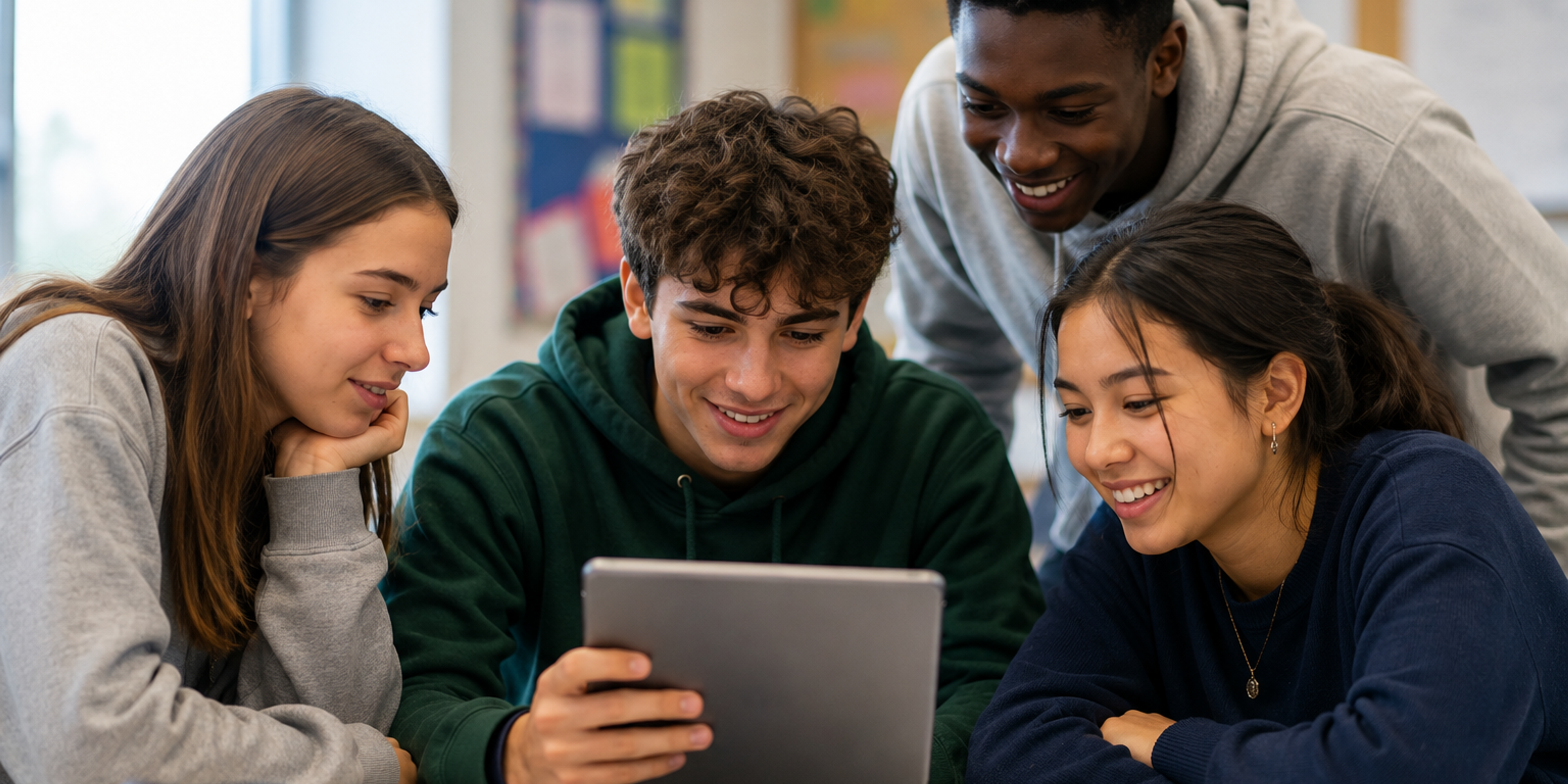
Researchers at the University of Bath are inviting young people and secondary school staff to help shape a new package of digital tools designed to support the wellbeing of 14–18-year-olds.
Mar 18, 2026
Introducing TULA: Your Tooled Up Learning Assistant
We’re excited to announce the launch of TULA, the Tooled Up Learning Assistant, which is now available to all Tooled Up members. Designed for parents, carers and education professionals, TULA gives you fast, easy access to trusted guidance drawn only from Tooled Up’s resources.

Jan 19, 2026
New PSHE Resources on Social Media Now Live for Testing
We’re delighted to share an exciting update on our collaboration with researchers from the University of Manchester. Following our announcement in June 2025, the first PSHE lesson resources developed through this partnership are now live on the Tooled Up Education platform and are available for testing.

Dec 17, 2025
Supporting Healthier Masculinities with Professor Michael Flood
We’re excited to be working with Professor Michael Flood, one of the world’s leading researchers on men, masculinities, gender equality and violence prevention.
Jun 19, 2025
Tooled Up Education to Collaborate with Researchers from the University of Manchester
Tooled Up Education is excited to announce we will be collaborating as a research partner with researchers from the University of Manchester.

Mar 17, 2025
Netflix's Adolescence: related resources in Tooled Up
Have you watched Adolescence on Netflix? Do you want to learn more about the issues raised? We have webinars and podcasts available to everyone, along with CPD and classroom resources available to Tooled Up teachers.

Oct 10, 2024
Tooled Up supports Bank of Ireland's 'Wild Child' campaign
Here at Tooled Up, we are really excited about our ongoing partnership with Bank of Ireland and we're very proud to have worked on a two-month long initiative aimed at supporting Bank of Ireland employees and their families. The ‘Wild Child’ campaign was a weekly digest delivered directly to BOI staff through August and September 2024, offering a range of resources, tools and support and for staff and their families.

Sep 09, 2024
Have smartphones and social media led to an anxious generation?
In this analysis, Dr Margarita Panayiotou, Senior Lecturer in Quantitative Methods in the Institute of Education at The University of Manchester, goes beyond the headlines to consider what the evidence really shows about the impact of smartphones on young people's mental health.

Apr 30, 2024
Sextortion: what is it and why is it in the news?
The National Crime Agency has issued an alert to UK teachers following an increase in sextortion: a type of online blackmail in which the offender threatens to release nude or intimate photos of the victim.

Mar 08, 2024
#InspireInclusion: Celebrating International Women’s Day
You are probably already aware that it’s International Women’s Day today. This year’s theme is #InspireInclusion and the event focuses on celebrating women’s achievements, raising awareness about discrimination and taking action to drive gender parity. Working as part of a small (but growing) team of fantastic women (and men), these are things that we are passionate about at Tooled Up, and we have plenty of resources for the Tooled Up community which will help to break down stereotypes and recognise the successes of some remarkable women.