February 12, 2025
When is the right age? Searching for age-appropriate ways to support children's online lives

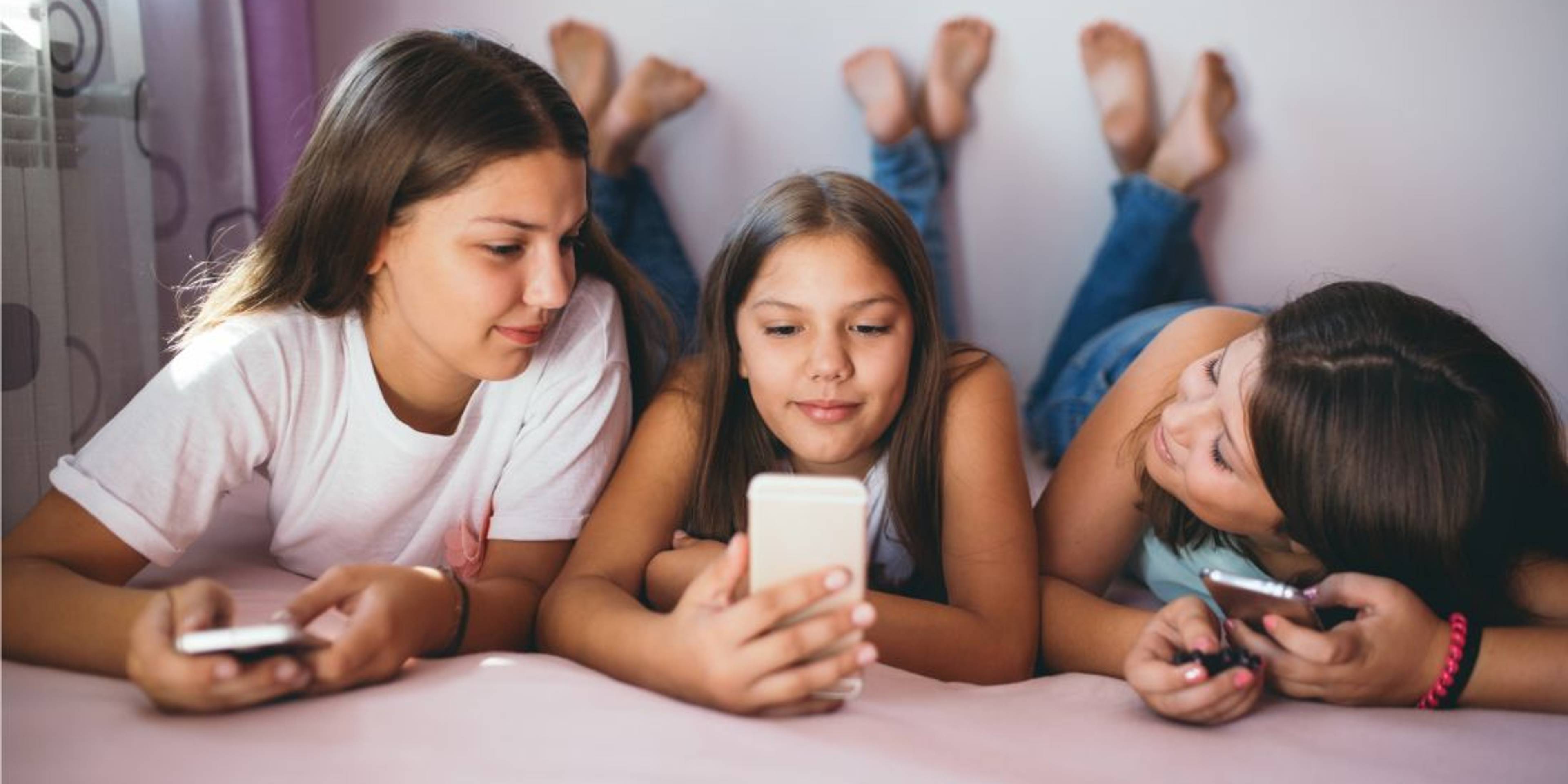
Currently, children's and young people’s use of digital technology is rarely out of the news. Age limits are debated. Calls for stronger limits are made, and questions are raised regarding whether society should ban 'under-age' children from various aspects of the digital world. 13 years of age is often cited as a digital 'age of consent', though this varies in some countries. Commonly used age limits are largely arbitrary, based primarily on US legislation, rather than evidence. In a recent paper, our researcher of the month, Dr Kim Sylwander, and her co-author Professor Sonia Livingstone, consider age milestones and evaluate whether or not the evidence supports them.
Are age limits the optimal way to regulate children’s digital experiences? Does it matter that they are widely contested and often poorly implemented? And are common boundaries even the “right” age, according to evidence from the field of children and digital media? Dr Sylwander persuasively argues that moving forward, a developmental approach can better support children’s rights.
Summary
Dr Sylwander and Professor Livingstone note that age limits work on the premise that it is possible to establish one single age when children are mature enough to critically navigate certain content, understand and process issues around consenting to their data being used by websites or apps, and deal with potentially risky and harmful contact from others online. But children develop differently, have different needs, and different social and familial circumstances. Therefore, their capacities to navigate the online world at any particular age are also likely to differ. We know that many young people are accessing sites and games earlier than the recommended age limits. We know less about how problematic this might be.
A central tenet of a children’s rights framework is the concept of “evolving capacities”. This recognises that child development is rarely smooth or harmonious but, instead, is complex and contextually variable. What is in the best interest of any child and what is (age) appropriate will change as they mature. Children experience both risks and opportunities online. The internet offers endless opportunities for learning, exploration and creativity and allows children to realise a range of human rights including social connection, education and play. But it also opens children to the kinds of risks that most parents are now very familiar with. Many parents struggle with these judgement calls and worry when children should have access to certain devices or platforms.
Researchers recognise that there are a host of risk and protective factors shaping children’s digital lives and evidence in this area is currently quite complex. The evidence base for age limits remains unclear. It's very challenging to establish that, by a certain age, all children can identify digital advertising, understand how their data drives personalised marketing and profiling, cope with insidious algorithms, fend of scammers and deal with inappropriate or upsetting content or interactions. Dr Sylwander notes that strictly enforced age limits may restrict the agency of those already equipped with the necessary maturity and skills, while failing to protect those who are not, even though they may have reached the required age. In both cases, children’s rights are put at risk.
To guide future developments, the paper calls on researchers of children and media to develop knowledge at the intersections of child development, children’s rights and children’s digital lives, which includes research on children’s perspectives. They note that, "At present, those who build age assurance 'solutions' may know little of child development; those whose call for designers to consider children’s social contexts may know little of the design choices available; those who pass laws to protect children’s vulnerabilities may not realise their diverse circumstances or anticipate the lived consequences for children".
Implications
So what does this all mean for parents who are having to make decisions in the best interests of their children?
Remember that you know your child best. You understand your own individual child’s needs and maturity, and their evolving capacities. Do you feel confident that they are able to to navigate an online space, which offers many opportunities but also a host of risks? Take time to evaluate their maturity and emotional readiness. We know that children are more susceptible to developing anxiety and other mental health issues during certain periods in their life. It’s important to consider what your child is experiencing now and whether or not they are emotionally ready for access to different digital devices or apps.
Consider not just whether they want it, but whether they need it. Parents are likely to feel pressured to take into account children's peers when making decisions around digital access. It's hard not to be swayed if your child is telling you that they are the only one without a phone and are being left out. Difficult as it might seem, try to ignore this noise and consider what benefit it would give both you and them to have a phone. Perhaps they need to travel alone? Perhaps they might have a special need which requires the use of a phone as a tool in daily life? Perhaps a so-called ‘dumbphone’ would suffice? Or perhaps you or your child would rather have the ability to track their whereabouts? Do you think they are mature enough? Do you feel that you can guide your child to use it safely? Circumstances will vary for each individual and each family. The important thing is to give it some serious thought.
Do your research and use any apps that they want to use. Phones can just be simple tools to make phone calls, but they can also provide access to a whole online world. It’s important not only to think about the phone itself, but to consider what benefits and risks individual apps might offer your child. Familiarise yourself with the apps that they would like to use and learn to navigate them yourself.
Establish a dialogue with your child. In many families, there is a disconnect between what children are doing online and what parents think they are doing online. Strive to keep conversations open. Be present in their online world, in a way that respects their right to privacy and their own social relations. Take a genuine and non-judgemental interest in their digital behaviours. Parent, don’t police!
Educate children about their rights. All children have human rights, and these rights are the the same whether they are offline or online. Children’s rights in relation to the digital environment are very clearly explained in the United Nations Committee on the Rights of the Child, General Comment Number 25. Dr Sylwander’s research group, Digital Futures for Children, has created a set of child-friendly resources (including games and quizzes), which can help children, young people, educators and parents learn about children's rights, and how they apply in the digital environment.
Encourage critical thinking about all digital media. Educational technology is pervasive in children’s everyday lives and these programmes and apps present great everyday opportunities to discuss what happens to our information when we sign in, where the information goes, who uses it, who owns it, and how long is it stored. When it comes to AI, have exploratory conversations about how our information is used to build these powerful models. Where does the information go? Who owns it? Has it just disappeared? If systems are learning about us, and building a profile of us, what kind of information and content is then served to us? You don’t need to know all the answers, but getting children thinking about these questions is valuable.
Consider the available evidence before making decisions. Currently, the dominant narrative surrounding phones and social media is one of fear. However, there is very little conclusive evidence showing a causal relationship between social media use and a decline in young people’s mental health. Be cautious of anything offering a simple answer to a complex question.
Recognise that there is only so much we can do as individuals. Parents, educators and children themselves as they grow and mature all play a role, but remember that the main responsibility to protect children from harm lies with the state. As child-rights advocates, Dr Kim Sylwander and her team are working hard to ensure that these conversations are happening at a national and international level.
Be reflective. Just because you and your child have come to a decision about access to a certain app or device, this doesn’t mean it is always the right one, or that it doesn't need ongoing thought. Reflect together on whether or not things are working. Keep evaluating! Talk about what works, what feels good and what doesn’t. Conversations should be ongoing, supportive and non-judgemental, even when things go wrong.
Audit your own digital world. We don’t consider the effect of our own media use on our children enough. Actively thinking about the impact of our own digital habits is important. What does our own relationship with the digital world look like and how do we engage with our children when using technology?

Dr Kim Sylwander
Postdoctoral Researcher at the Digital Futures for Children Research Centre, London School of Economics and Political Science
Dr Kim Sylwander is a postdoctoral researcher at the Digital Futures for Children research centre at the London School of Economics and Political Science. This joint LSE and 5Rights Foundation centre facilitates research for a rights-respecting digital world for children. Dr Sylwander holds a PhD in Child and Youth studies and has conducted post-doctoral research at the Centre for Sexology and Sexuality Studies at Malmö University. She has also been an appointed expert in government inquiries in Sweden on sexual exploitation and the effects of digital media on children. Her work has focused on children, youth and media, touching on issues such as online hate, racism, bullying, sexuality, sexualisation, digital gender-based violence, consumption of pornography, and online child sexual exploitation and abuse. Dr Sylwander has headed various research projects within academia, the UN, civil society, and within government agencies. Her current research projects focus on children’s rights in the digital world. She is currently researching the impact of the UN Committee on the Rights of the Child’s General comment no. 25; the evolving capacities of children in relation to their rights in the digital environments and she is also involved in projects on children’s visions of digital futures and AI.
Dr Kim Sylwander
Postdoctoral Researcher at the Digital Futures for Children Research Centre, London School of Economics and Political Science
Related Resources



Scroll our research gallery

Sep 11, 2026
Whose Stories Make History? Teaching Black British History Through Billy Waters
What can we learn about a historical period when we shift our attention away from its most famous figures and look instead at a life that has largely been overlooked? Billy Waters is not a household name, but his life offers a fascinating route into questions of Black British history, identity, poverty, disability and representation. Teachers can now explore his story with students through Billy Waters: Songs from the Shadows, a set of free educational resources featuring a 20-page graphic novel and digital soundscape for young people aged 11–16. Born in the late eighteenth century, Billy Waters was a Black sailor and disabled veteran who later became a well-known street musician and performer in nineteenth-century London. His life provides a particularly rich lens through which to explore the society in which he lived, and the lives and experiences that have often received less attention in traditional accounts of the past. The Billy Waters Project brings together historians, artists and musicians (some of whom are our new Researchers of the Month) to explore his story in imaginative and accessible ways. Drawing on the limited and sometimes ambiguous evidence that survives about his life, the resources invite young people not only to learn about Billy, but also to think about how histories are constructed, whose stories are preserved and how power, identity and representation shape the way we understand the past.

Aug 14, 2026
Deepfakes and Damage: Helping Schools Respond to AI-Generated Image Abuse
When we hear the word 'deepfake', many of us might think of celebrities, political misinformation, or the kind of AI 'slop' that now features heavily on our social media feeds. We might be less likely to think about school pupils. Yet emerging research suggests that AI-generated sexual deepfakes are an issue that schools increasingly need to understand and be prepared to address. AI-facilitated abuse is a growing concern, with reports of deepfake imagery being used maliciously against both pupils and teachers. Whilst anyone can be targeted, research suggests that sexual deepfake abuse is strongly gendered, with girls and women disproportionately affected. Within UK schools, AI-facilitated image-based sexual abuse most commonly involves groups of boys taking existing photographs of female peers from social media and using generative AI tools to create fake nude images. There have also been reports of criminal gangs targeting schools, threatening to take publicly available images of children from school websites and social media and turn them into sexually explicit images for the purposes of blackmail. In the UK, producing this kind of material is a criminal offence, though globally, laws are not consistent. Whilst deepfake images are not real, the harm they cause is. Emotional, reputational and developmental consequences can be profound and anyone who experiences this form of abuse deserves to be taken seriously and supported. With her team, our latest Researcher of the Month, Professor Tanya Horeck, has recently published one of the first empirical studies to examine AI-generated sexual deepfakes within UK schools. Using qualitative data from interviews with secondary school staff and pupils at eight UK schools, Professor Horeck explored what young people and school staff understand about sexual deepfakes, how schools are currently responding, teachers' confidence and preparedness and what support schools need. The findings revealed significant gaps in knowledge and understanding, alongside a strong appetite among both students and teachers for more information, guidance and education. It's important to note that, as an early qualitative study in a rapidly developing area, the research involved only a small number of participants and was designed to explore experiences and perspectives rather than establish how widespread particular views or practices are.
Jul 14, 2026
What Does Effective Drugs Education Look Like? Lessons from The Illicit Project UK
Our latest Researcher of the Month, Professor Harry Sumnall, is leading a team of researchers at Liverpool John Moores University to adapt and test a school drug prevention programme aimed at older teens (aged 15-18). The Illicit Project UK aims to develop teens' skills so that they can make healthier and safer choices when it comes to drug use, avoiding fear mongering approaches of the past that were designed to scare young people, and which we now know to be ineffective. The programme is fully aligned with the national RSHE curriculum in England and with the health and wellbeing curriculum in Scotland. This evidence-based approach is currently being tested in the North West of England and Scotland. The researchers are still looking for more schools, so if you work in a setting based in these areas and would like to be involved in the trial, please contact us and we'll put you in touch with the research team. You can find out more about what participation involves here.

Jun 16, 2026
Making Feedback More Motivating: Learnings from New Research
We often assume that positive feedback will always encourage people to keep trying hard. However, new research by our latest Researcher of the Month, Professor Nils Jostmann, and his co-author Professor Eddie Brummelman, suggests that praise and encouragement can sometimes have the opposite effect, and that how and when we give feedback really matters. Feeling positive about our progress on a task, or believing that we are doing better than we expected to, can sometimes act as a cue that less effort is needed, causing us to work less hard or 'coast'. Positive feedback may therefore have unintended consequences. Rather than spurring us on, it can sometimes encourage us to ease off because we feel confident that we are already doing well enough. Professor Jostmann's recent research sought to explore this further, examining whether the timing of positive feedback influences whether it boosts motivation or inadvertently undermines performance.

May 22, 2026
Reframing Masculinity: Tips for Parents and Teachers Supporting Boys
Dr King-Hill's research with young people has found that many many boys and young men today are grappling with how masculinity is defined and expressed, and many are struggling. In response, she has recently published We're In This Together, Reframing Masculinity for Young Boys and Men. This free, practical and accessible resource is designed for educators and parents or carers, and is packed with thoughtful guidance and realistic strategies to help the boys and young men growing up in our care to thrive. We'd recommend that all of our Tooled Up parents and educators download and read it.

Apr 14, 2026
Empowering young people to overcome low mood and boost wellbeing
Our latest researcher of the month, Professor Maria Loades, is currently seeking teens aged 13 - 17 to take part in a new study. Her Unlock Wellbeing trial will test the efficacy of digital, single session, self-help interventions, which have been designed to help young people in need of mental health support to feel more hopeful, more in control, and less sad or low. In the UK, there is currently a huge gap between the need for mental health support and access to help for young people. We know from a wide body of research that many young people feel unable to ask for help when experiencing depression symptoms. Whilst around 3% of young people are in contact with Child and Adolescent Mental Health Services (CAMHS) at any point in time, this is only a very small percentage of those impacted by depression, anxiety or stress. In fact, at least one in three young people has at least some symptoms of depression, and one in 10 might meet the criteria for a mental health disorder. There are several reasons why many young people do not seek, or receive, the support they need. Adolescence is a time of growing independence, and many teens prefer to manage difficulties on their own, speak to friends or look online, rather than reach out to adults for help. Although stigma has reduced, concerns about how others might perceive them, and uncertainty about what support is available, can also hold them back. Practical barriers also play a role. School and clinic hours often overlap, and services are not always easily accessible. Alongside this, there is a shortage of trained therapists in the UK, leading to high thresholds for support and long waiting times, even for those who do seek help. Even more interestingly, of those young people who do seek formal support, almost 50% stop attending after just one session. Whilst one session may be sufficient for some, other young people may disengage due to practical challenges, or because the first session did not meet their expectations, even when further support was available. Given the shortcomings of the current model of support, research by Professor Loades and her team has identified a need for additional help that is scalable, barrier free and available on demand. After pilot tests, she's now planning a full randomised controlled trial to evaluate a series of self-guided, digital, single-session interventions for teens, and she's looking for volunteers. The interventions were originally developed by Professor Jessica Schleider in the Lab for Scalable Mental Health in the US, where they showed beneficial effects on symptoms of depression and anxiety as much as nine months after the intervention. They have been adapted by Professor Loades and colleagues for UK use.

Mar 12, 2026
The Universal Classroom: A New Free Screening Tool for Year 1 Teachers
Our latest Researcher of the Month, Professor Joel Talcott, is one of a team of researchers and educators who have worked on a new universal screener for all Year 1 children in the UK, which will be made freely available to all teachers this Autumn. Within the UK education system, formal identification of SEND typically involves ascribing diagnostic labels, such as dyslexia, dyscalculia or ADHD, based on under-attainment in one or more educational outcomes, compared with age-related expectations. However, access to assessment and diagnosis is challenging, and it is currently not equitable for all. The cost of missing children’s needs has serious personal consequences, as pupils underachieve due to unidentified barriers to learning. It also has wider and significant economic costs to society as a whole. Professor Talcott's new universal screener will address this issue. It offers a simple screening tool, which teachers are initially advised to use with all pupils during the first term of Year 1. Supported by government funding through a special educational needs innovation initiative, the Universal Classroom will be delivered via a freely accessible web platform, allowing any school or teacher to use it at no cost.

Feb 17, 2026
Children's Experiences of ADHD
While there have been many empirical studies of childhood ADHD, there have been few qualitative studies investigating first-hand accounts of the lived experiences of children. Much of the literature focuses on the perspectives of parents or teachers, rather than centring children’s voices. But what are children's thoughts, feelings and experiences? Our latest Researcher of the Month, PhD candidate Daphne Ling, has recently published findings which begin to address this research gap.

Jan 19, 2026
The power of reading: books, vocabulary and learning
Did you know that 2026 is the UK’s National Year of Reading? This long-overdue initiative reflects growing concern and renewed commitment around children’s reading and literacy. As Dr Maria Korochkina, our latest Researcher of the Month, puts it: “The ability to read opens up worlds. Reading enables children to progress into post-primary education and provides the basis for lifelong learning and prosperity into adulthood”. Frequent readers tend to have a stronger understanding of both their own and others’ emotions. They are often better able to communicate these emotions, a skill linked to higher emotional intelligence and improved mental wellbeing. Reading also encourages cause-and-effect reasoning and helps children imagine scenarios beyond the immediate moment - developing the skill of -future-thinking'. A rich vocabulary underpins learning across the school curriculum, strengthens thinking and communication skills, and predicts both academic attainment and later life outcomes. Research consistently shows that the most effective way to build vocabulary is through reading. However, learning to read well is not quick or effortless. The journey to skilled reading typically spans around ten years, requiring high-quality classroom instruction alongside sustained practice through independent reading. For many children, this process is painstaking, demanding consistent teaching, encouragement and opportunity over time. Against this backdrop, recent evidence presents a worrying picture. Fewer children are reading for pleasure than ever before. In 2024, only one in three UK children and young people aged eight to 18 reported enjoying reading in their free time. Even more strikingly, just one in five said they read daily for pleasure, the lowest level recorded since the National Literacy Trust began collecting this data in 2005. This matters because reading ability and reading enjoyment are deeply intertwined. Children who find reading effortful are far less likely to choose to read independently. Dr Korochkina’s research highlights how early reading experiences shape later habits: difficulties with phonic and morphological knowledge in the early stages of reading acquisition can have a snowball effect, reducing confidence, fluency and motivation over time. Her work also offers a powerful note of optimism. Books that children actively choose to read, including contemporary, popular texts, provide rich opportunities to develop vocabulary, particularly when children read widely. Ensuring access to a diverse range of engaging reading material, alongside strong early instruction, can play a vital role in building both reading skill and reading motivation. Fostering confident, motivated readers requires long-term commitment. It is not enough for children simply to have books available to them. They need skilled teaching, time, practice and a culture that values reading as both a skill and a pleasure.

Dec 15, 2025
Crossing the line into cybercrime
As the most digitally connected generation so far, young people today face new challenges. Our latest Researchers of the Month, Professor Davidson and Dr Farr, have found that in the last decade, an increasing number of young people (particularly young men) have committed serious cybercrime offences, particularly hacking and money laundering. Their new book, written following a large research project funded by the European Union’s Horizon 2020 research and innovation programme, seeks to understand the drivers behind this trend. It explores a range of potential factors that may lead young people to engage in risky online behaviours, and to identify effective pathways for prevention.